


Serhii Rymarchuk: New Profession as Foundation for Moving Forward
“As soon as I heard about the training, I knew I would apply. I really wanted to get back among people and start again — to talk, work, make things with my hands and feel part of something. And I have never regretted choosing the drone pathway,”
says Serhii Rymarchuk from Sheptytskyi in Lviv region.
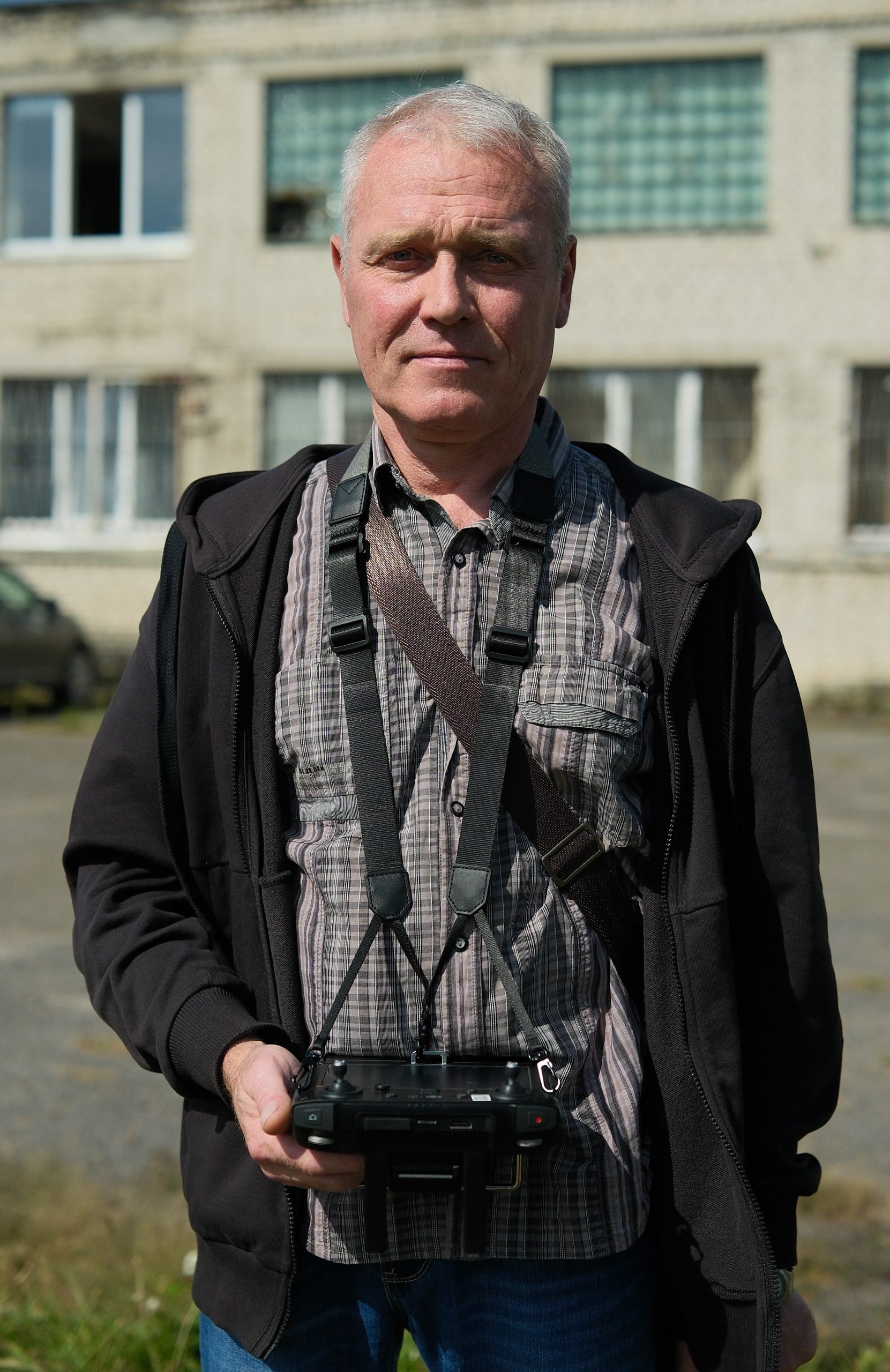
Fifty-six-year-old Serhii has spent his entire life working with machinery. As a teenager, he repaired mopeds and bicycles, later trained as an underground electromechanic and worked in coal mines. This was followed by military service and his own small business. When Russia’s full-scale invasion began, Serhii once again joined the Armed Forces. Years of service and physical strain, however, eventually led to a service-related disability and discharge.
For some time, Serhii stayed at home, regaining his health and looking for a way to return to an active life. Finding a job proved difficult — not all employers were ready to hire a person with a disability.
Training became the turning point. A family friend told him about opportunities offered through the Skills for Inclusion project, and Serhii immediately applied for the Agricultural Drone Operator course at Vocational School No. 11.
His trainers quickly recognised his strong technical aptitude and ability to learn fast. Serhii excelled particularly during flight practice.
“I genuinely like agricultural drones. They’re powerful, impressive machines with incredible functionality. I want to keep practising, spend more time flying and maybe even start my own business offering services to farmers,” he says.
Serhii actively follows developments in agricultural technology, watches training materials from Ukrainian operators and sees significant long-term potential in this profession.
“Many people in our group were discharged from service. I see how quickly they learn and how this profession opens new perspectives for them. I want even more young people to be able to master such a profession to plan their future confidently and develop our civilian technologies for good, not destruction,” he adds.
Background
The training was conducted within the project “Skills for inclusion: workplace-based training for activating vulnerable groups”, implemented by the NGO “Ukrainian professional development” within Skills4Recovery.
The Multi Donor Initiative Skills4Recovery is financed by the European Union, Germany, Poland, Estonia, and Denmark. It is implemented by Deutsche Gesellschaft für Internationale Zusammenarbeit (GIZ) and the Solidarity Fund PL (SFPL).