

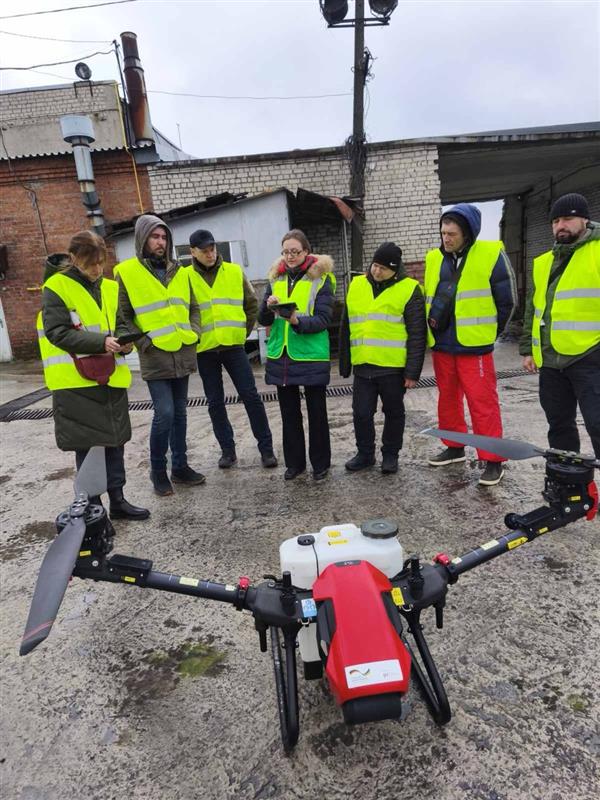
Veteran Trains as Drone Operator for Civilian Use
“I agreed to take part in the training straight away. Drones are not only about war. They also have a strong future in civilian life. In the energy sector, drones can help assess damage after attacks or work in places that are dangerous or difficult for people to reach,”
says Oleksandr, a veteran and employee of Prydniprovska Thermal Power Plant
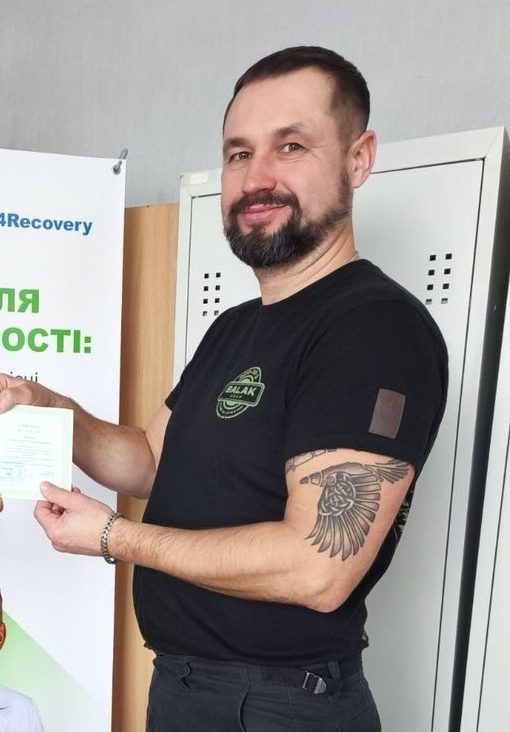
In 2022, Oleksandr left his job at the power plant and went to defend Ukraine. For almost two years, he fought in some of the most difficult areas of the frontline, including Izium, Soledar, Bakhmut and Orikhiv. In December 2023, he was demobilised for family reasons and returned to work at Prydniprovska Thermal Power Plant, which is regularly shelled by Russian forces.
“It is very difficult to see damaged equipment and destroyed buildings. Things we took care of for years can disappear in a single moment,” says Oleksandr.
Today, Oleksandr works as a surveyor, helping his colleagues keep the power plant operating safely. After attacks, the team assesses the damage, plans repairs and continues working in conditions far from normal.
To expand his professional opportunities, Oleksandr joined a training programme to become an operator of remotely piloted unmanned aerial vehicles. The course was free of charge and organised through cooperation between Prydniprovska Thermal Power Plant and the Dnipropetrovsk Vocational Education and Training Centre of the State Employment Service, with support from Skills4Recovery.
During his military service, Oleksandr had already worked with reconnaissance drones. The training helped him complement this experience with civilian skills, including drone programming, operating drones in different weather conditions and performing practical tasks.
Background
The training was conducted within the project “Skills for inclusion: workplace-based training for activating vulnerable groups”, implemented by the NGO “Ukrainian professional development” with financial support from the European Union, Germany, Poland, Estonia and Denmark within the Multi Donor Initiative Skills4Recovery, implemented by Deutsche Gesellschaft für Internationale Zusammenarbeit (GIZ) GmbH and the Solidarity Fund PL (SFPL).
The project aims to expand opportunities for people with disabilities and those leaving military service, supporting their activation and reintegration into the labour market through reskilling programmes in economic sectors relevant to recovery and aligned with the qualifications of the target groups.