

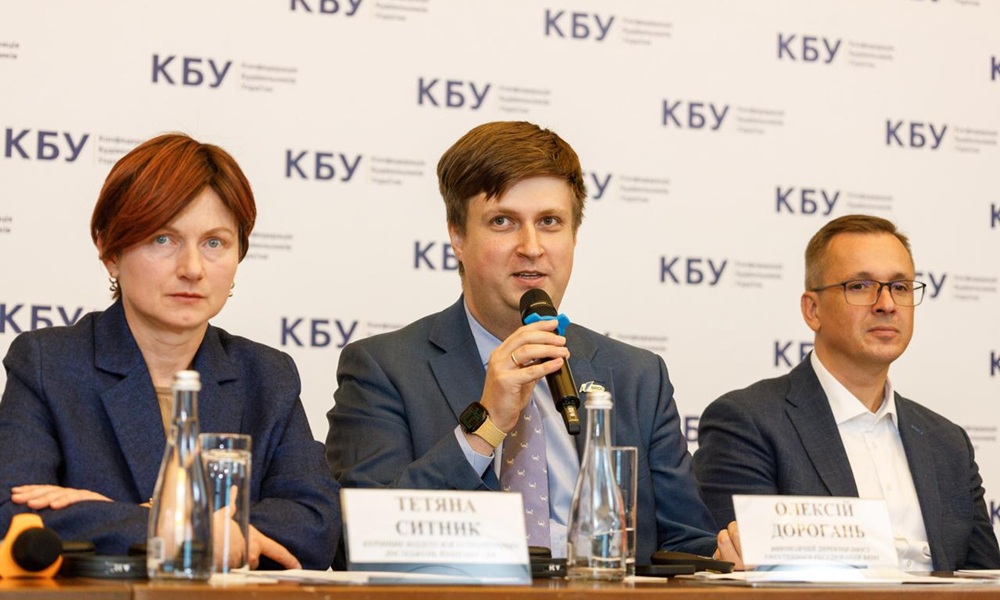
On 8 October 2025, the Multi Donor Initiative Skills4Recovery and the European Bank for Reconstruction and Development (EBRD), in partnership with the Confederation of Builders of Ukraine (CBU), announced a pilot initiative to train qualified construction workers. Practical, on-the-job training with mentors from participating companies will come first, followed by complementary theoretical instruction in VET schools. The initiative is implemented within the Bridging Skills for Construction project.
“Every restored building, bridge, or road should leave behind something even more valuable — a skilled workforce. Through this pilot, we encourage construction companies to host trainees on their sites. In this way, we invest not only in infrastructure but also in people and their future, addressing urgent workforce shortages and building a sustainable system where businesses, educators, and policymakers work together for Ukraine’s recovery,” said Barbara Rambousek, Director for Сompetitiveness and Economic Governance, EBRD.
The initiative consolidates efforts of businesses, government, international partners, and education providers. EBRD will identify suitable infrastructure sites and recommend participating companies. These companies will open their construction sites to trainees for one to three months of practical, on-the-job training. VET providers will complement this with classroom-based learning. Skills4Recovery will provide practical and methodological support, helping both companies and VET providers to organise the training effectively.
“Systematically integrating traineeships into infrastructure investments can generate crucial co-benefits — creating jobs and quality work-based training opportunities for adults, young people, women, and other vulnerable groups. Trainees gain practical experience under the guidance of business professionals and acquire skills that companies genuinely need, while employers receive workers trained according to EU standards. Germany is proud to support this practical and inclusive approach through Skills4Recovery,” emphasised Jens Busma, Head of Cooperation, Embassy of the Federal Republic of Germany in Ukraine.
The project will run from November 2025 until July 2026 in 2–3 regions of Ukraine where EBRD-financed infrastructure projects are underway. It will involve at least 12 training centres and more than 30 employers. Up to 500 applicants for shortage occupations in construction will be trained, filling up crucial needs of construction companies. Based on this pilot, recommendations will be developed to improve recruitment and training systems, provide digital tools to support training for shortage professions, and update training programmes based on the Build Back Better approach — focusing on energy efficiency, inclusion, and technological innovation.
“Comprehensive recovery is only possible through joint actions of the Ukrainian government, international partners, construction businesses, and VET providers. The CBU is mobilising its member companies to engage in this pilot so that business becomes not only an implementer of projects, but also a partner in shaping the workforce and practices that will define the future of Ukraine’s construction sector,” said Lev Partskhaladze, President of the Confederation of Builders of Ukraine.