

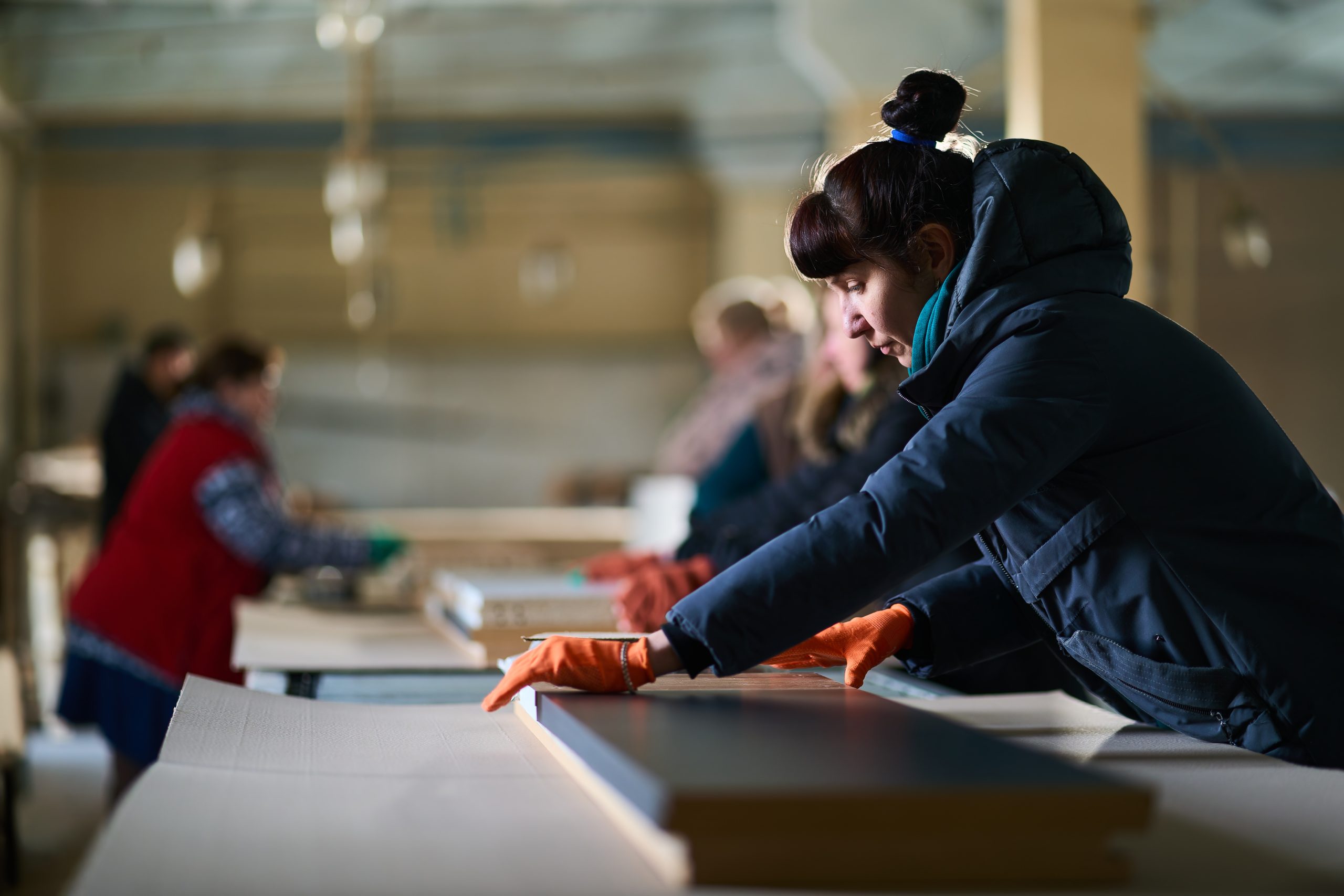
Oksana Hrechenko: from auxiliary worker to CNC operator
“On my first day at work, my hands were shaking, and I had no idea which side to approach the machine from or which button to press […] Within a week, I was already doing it! It was incredible. Had I really done all of that myself, without mistakes?”
says Oksana Hrechenko, a CNC operator at the Dnipropetrovsk furniture plant
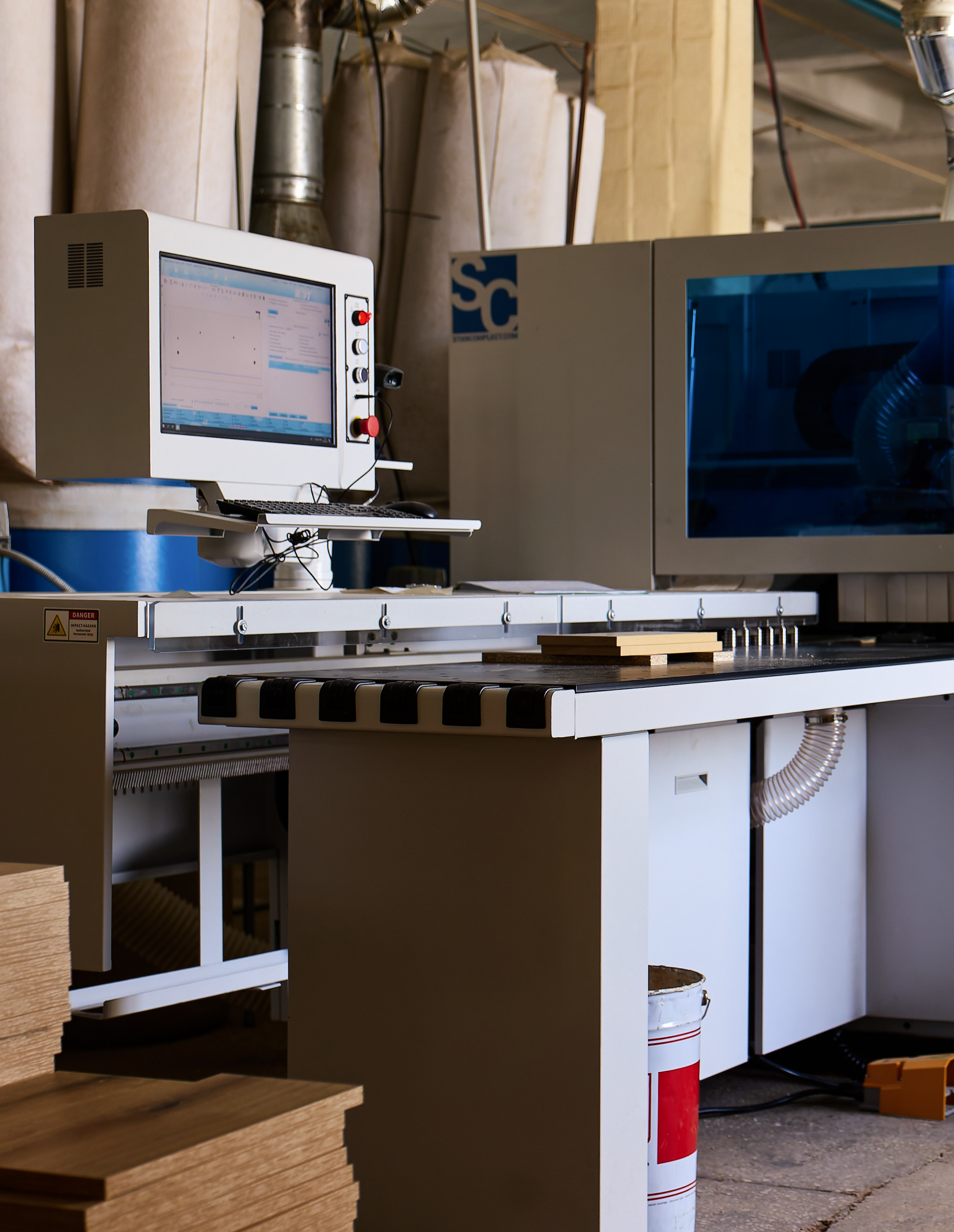
Stepping into a “male-dominated” profession at 50 is no easy decision. Oksana Hrechenko took that step, completed training within Skills4Recovery, and now works as a CNC operator at the Dnipropetrovsk furniture plant, proving that career change knows neither age nor gender limits.
Before that, Oksana worked as an auxiliary worker, carrying out minor repairs and fixing cosmetic imperfections at the final stage of furniture production. When the full-scale invasion began, the factory faced a shortage of workers: “It turned out there was simply no one left to do the job. There were no men left at all, so I was offered the chance to take over at the machine.”
This decision became a real challenge. Despite fear and doubt, Oksana chose to try. She quickly gained new technical skills and mastered the profession of CNC operator thanks to the retraining programme for women and other target groups, “From Class to Work,” implemented by the National Development Institution (formerly the Business Development Fund) as part of the Skills4Recovery initiative.
The training combines theoretical materials, online sessions and hands-on practice directly in the workplace, with strong support from a mentor: “You can always go to him. He comes over, explains things, talks you through them — he always helps if something isn’t clear to me and checks whether I might have done something wrong.”
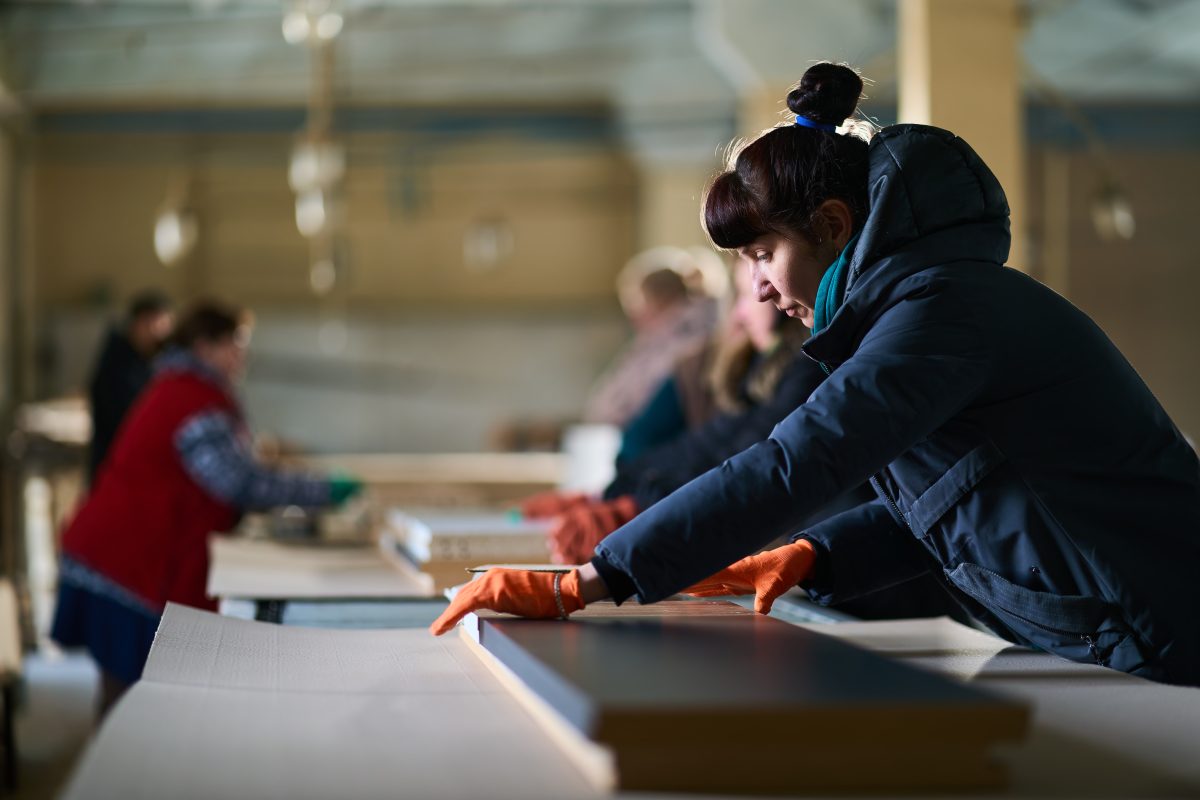
Oksana’s colleagues at the Dnipropetrovsk furniture plant
Today, Oksana works confidently with computer numerical control equipment, independently setting up programmes and processing parts. In a team traditionally dominated by men, she quickly became one of their own and feels supported by her colleagues, while professional standards remain the same for everyone: “Standing for eight hours is, of course, exhausting. Some parts are massive and heavy, they take a long time to drill, and you have to spend a long time by the machine. But I played basketball from childhood, so physical exertion is normal for me. I’m not complaining about anything. I knew exactly what I was getting into.”
Oksana does not regret her decision and sees clear opportunities for growth in her new profession: “First, there is the prospect of career growth. Starting from scratch and working your way up to operator level — that also says something. And accordingly, the pay is higher, as are the qualifications and the new work experience.”
She is already planning her next steps: to continue learning, master new equipment and keep growing professionally. “I definitely do not want to go back. God willing, I’ll move up and train as a master technician. I want to teach other women myself. The war will end someday, we’ll take on new people, buy new machines, and there will be people to train,” she concludes.
Background
The training was conducted within the project “From class to work: workplace-based training for women and other groups”, implemented by the National Development Institution with financial support from the European Union, Germany, Poland, Estonia and Denmark within the Multi Donor Initiative Skills4Recovery, implemented by Deutsche Gesellschaft für Internationale Zusammenarbeit (GIZ) GmbH and the Solidarity Fund PL (SFPL).