

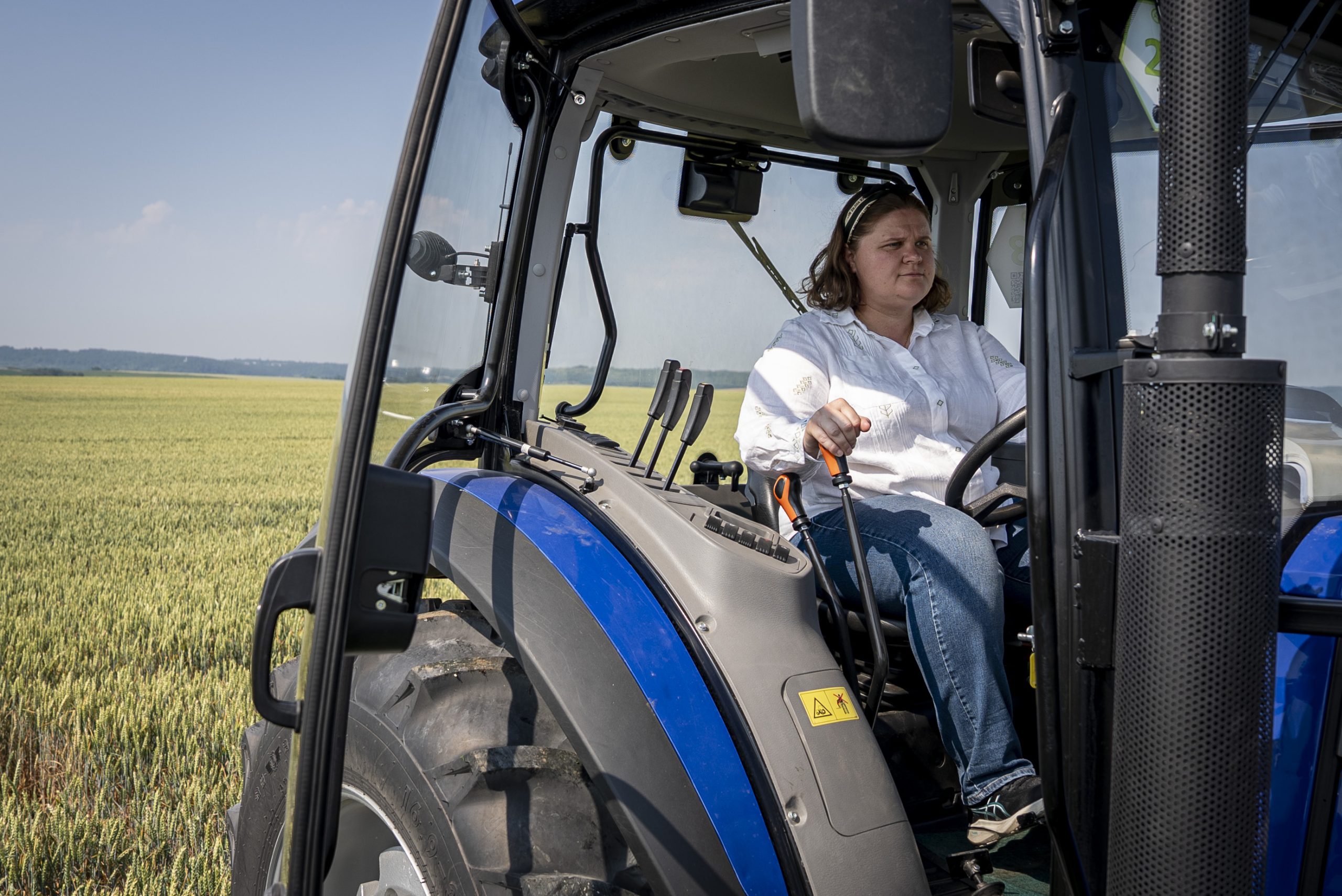
Kateryna Chubko: how farm director became tractor driver
“The greatest advantage of the project is the opportunity to train without taking time away from work and gain new qualifications that make employees more versatile,”
says Kateryna Chubko, the director of a farm in Lviv region.
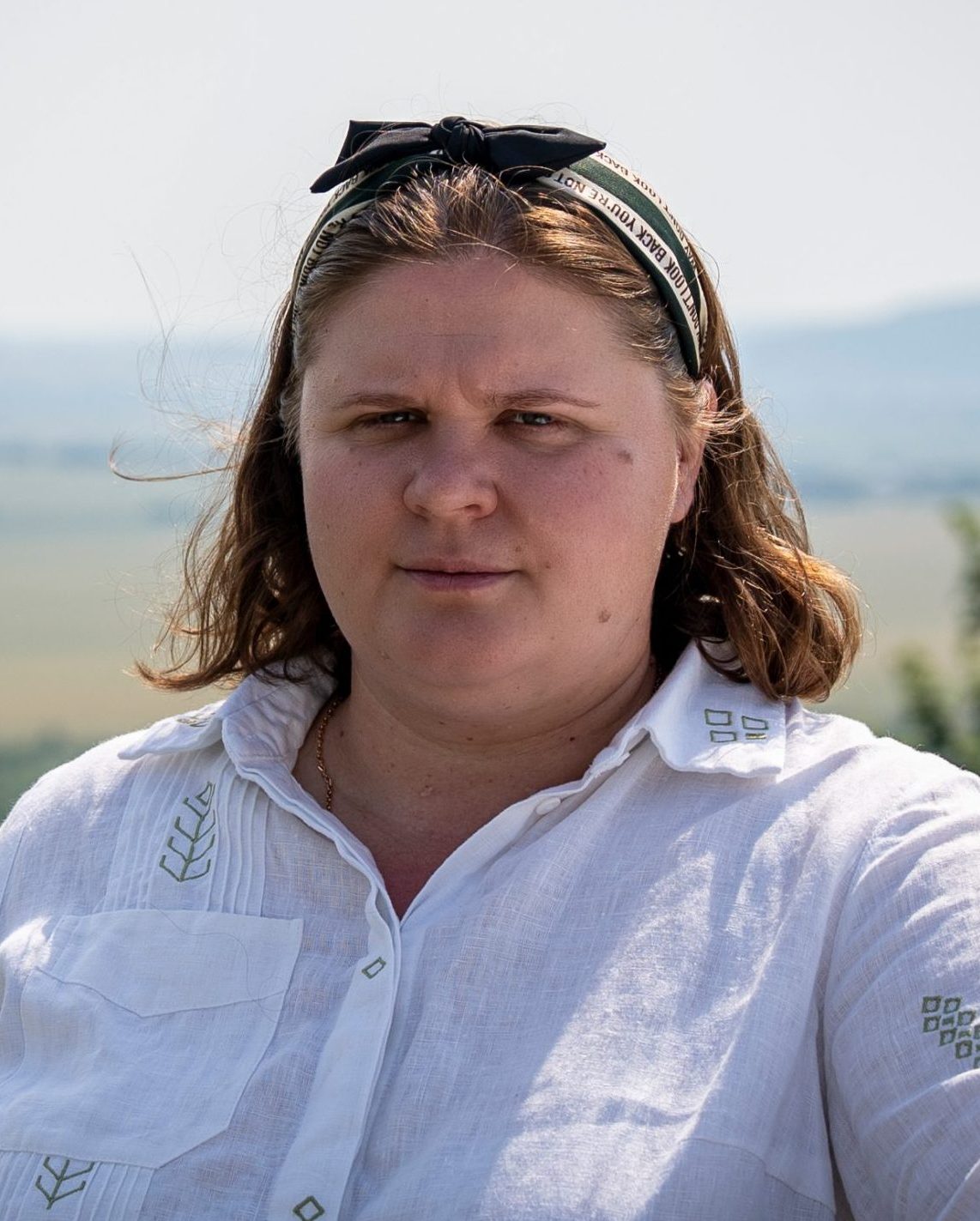
Kateryna has managed the farm, which is part of the VILIIA Group, for six years. A qualified process engineer, she is now responsible for more than 10,000 hectares of land and a team of 67 employees.
Kateryna has always pursued what interested her. This is how she developed an interest in tractors: she asked her colleagues about different types of machinery and asked to get behind the wheel and try driving one.
After the start of Russia’s full-scale invasion, her desire to learn how to operate a tractor became a practical necessity. As employees were mobilised, the farm increasingly faced workforce challenges. Many machinery operators joined the Armed Forces of Ukraine. Sadly, some of them were killed. For Kateryna, knowing how to operate agricultural machinery also became a way to step in and support her team at a critical moment.
“During the harvest, we do not stop at all. If a tractor or combine harvester driver is having lunch, someone has to take over and keep the machinery running. There have been times when a field came under attack while people were working there. I simply want to be ready to deal with any situation,” she explains.
Last year, Kateryna obtained a category A1 tractor driver’s licence and can now officially operate light tractors while carrying out agricultural work. Her next goal is to obtain a category A2 licence, which will allow her to work with more powerful machinery. Kateryna is therefore currently participating in the From Class to Work project, implemented by the National Development Institution under the Skills4Recovery.
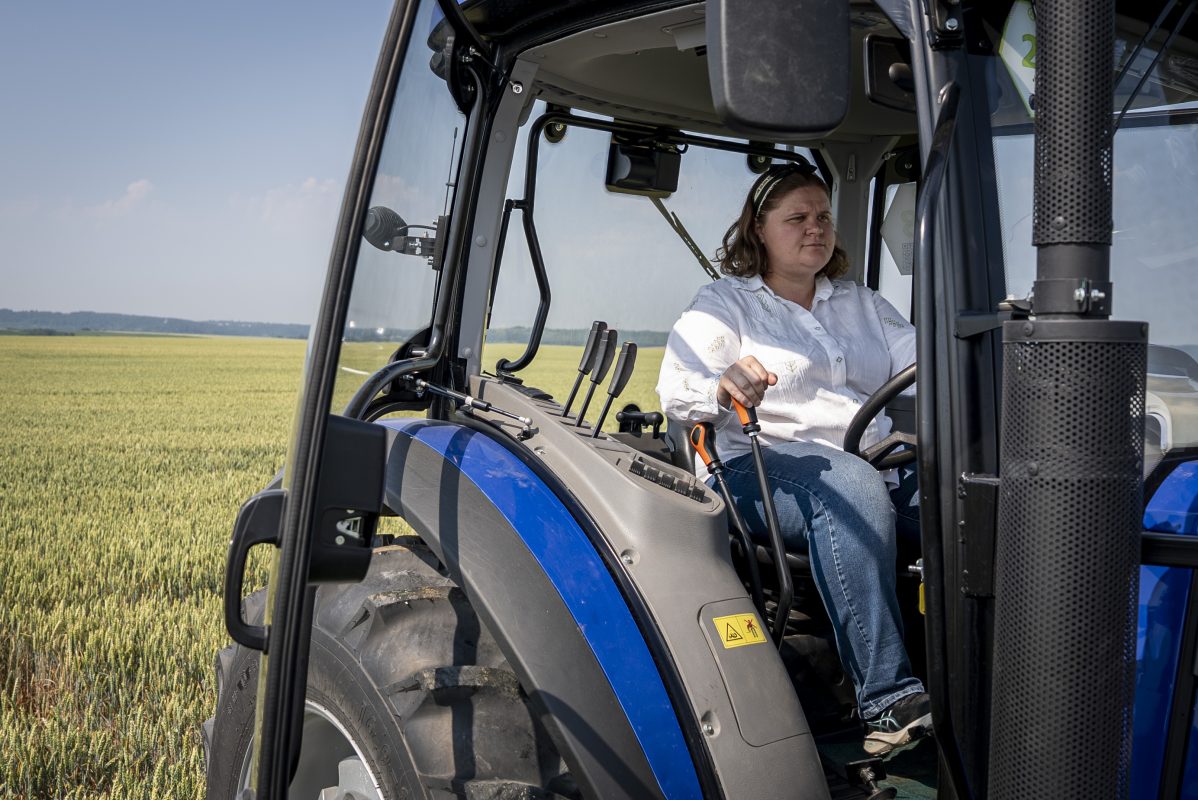
Kateryna particularly values the opportunity to train alongside her colleagues, the chief agronomist and chief engineer. The team discusses the course materials together, shares experiences and debates with the instructors.
“We are practitioners, while they are theorists. And that is exactly where the most interesting discussions begin,” Kateryna says.
She believes that working as a tractor driver is far more complex than it may seem. The job requires not only the ability to operate machinery but also knowledge in a range of areas and the readiness to respond quickly to unexpected situations.
“When you are driving a tractor and towing a load, you need to understand the turning angle, turn correctly, avoid causing harm to yourself or anyone else, and work safely near power lines. You need to understand the instrument readings and control mechanisms, know the most common faults, and know what to do if the tractor catches fire or breaks down,” she explains.
Kateryna also enjoys seeing what is happening in the field firsthand and noticing things that are not visible from the office.
“There may be operational mistakes, gaps in the crops, or areas that have not been treated properly. Sometimes you need to stop and take a closer look at something. You can only see all of this from the tractor cab. My team also knows that if I want to check something, I will get into the tractor and check it myself. That is why they always try to tell me the truth,” Kateryna says with a smile.
She is currently the only female tractor driver in the company. However, Kateryna believes that the war has already led many Ukrainian women to retrain.
“The war has revealed an entirely different dimension of femininity in Ukraine. Women are not sitting idly by while men are fighting. I see it in the villages too: a family had a plot of land and a small tractor, then the husband went to the front. A year later, you see the woman behind the wheel, working in the field,” Kateryna says.
Another harvest and new challenges lie ahead. The agricultural sector continues to experience labour shortages because of the war, but Kateryna is convinced that stopping is not an option. She vividly remembers the spring of 2022, when many people did not know what would happen next or whether it was worth going out into the fields at all.
“We got into the tractors with the engineers, not even the tractor drivers, and started sowing. I remember a French television crew arriving while we were spreading mineral fertiliser in the field. They asked us, ‘How do you see your future?’ I replied, ‘Here in the fields. Missiles are flying, but we are sowing. We will keep sowing, and we will harvest our crops.’ That is the spirit in which we continue moving forward,” Kateryna recalls.
This principle remains central to her today: to work, learn new skills and keep moving forward, whatever the circumstances.
Background
The “From Class to Work: Vocational Training for Women and Other Target Groups” project is implemented by the National Development Institution (NDI) with financial support from the European Union, Germany, Poland, Estonia and Denmark within the Multi Donor Initiative Skills4Recovery, implemented by Deutsche Gesellschaft für Internationale Zusammenarbeit (GIZ) GmbH and the Solidarity Fund PL (SFPL).