

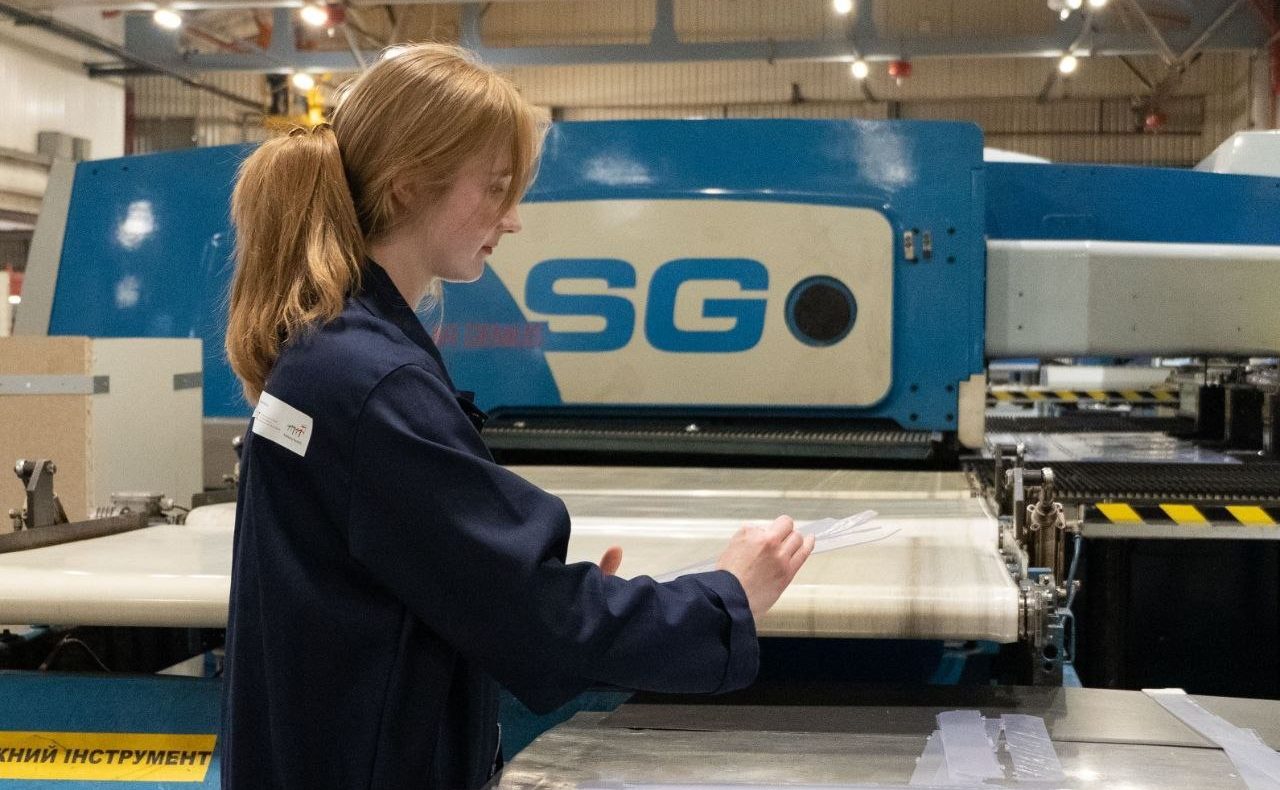
From perfect NMT score to technical career
“Ukraine needs skilled professionals, particularly in technical fields. When people study, work, gain experience and become professionals in their field, they are also contributing to the country’s future,”
says Daryna, a student at the Technical Professional College of Lutsk National Technical University.
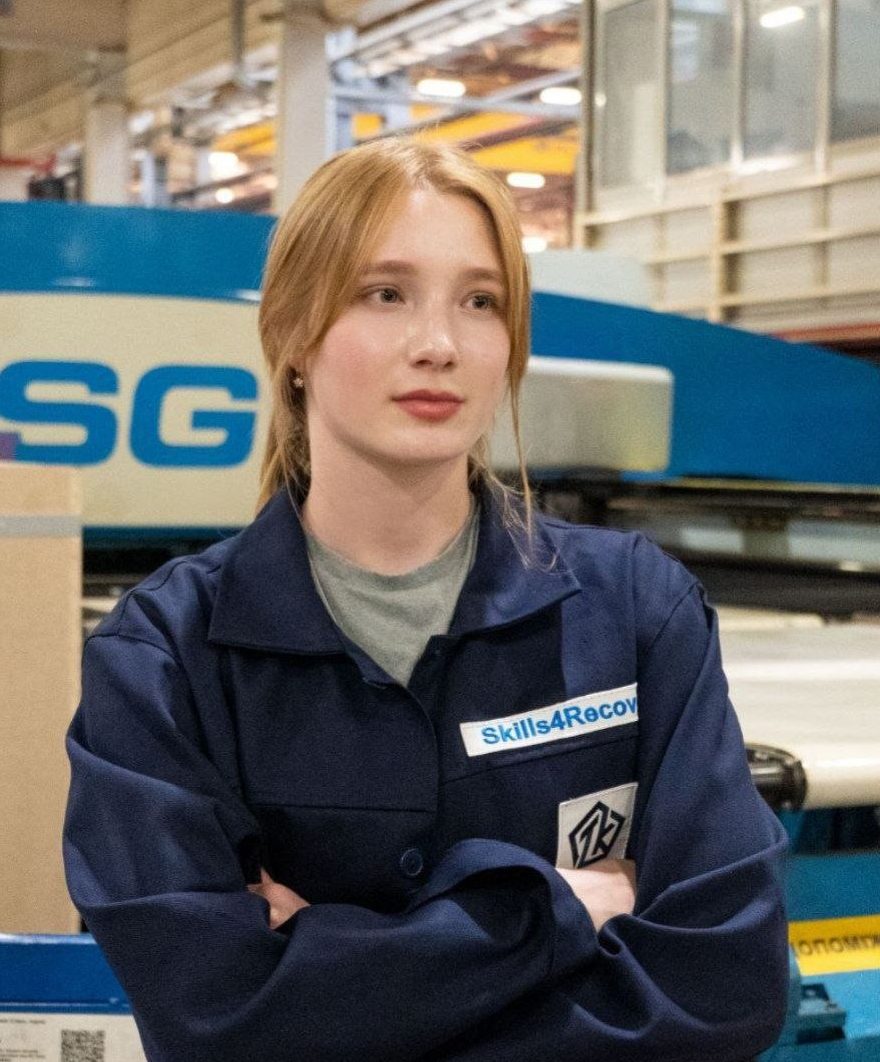
Having achieved the maximum score of 200 in Ukrainian language in the National Multi-Subject Test (NMT), Daryna could have chosen a higher education institution. However, she made a conscious decision to enrol at a technical college. She began studying a programme related to the diagnostics and adjustment of electronic equipment in motor vehicles and later also gained a qualification as a maintenance fitter.
“I have always been interested in cars and technology. When people started telling me about the different programmes, I heard the title ‘specialist in the diagnostics and adjustment of electronic equipment in motor vehicles’. It immediately caught my attention,” Daryna explains.
At first, she was worried that she would be the only girl among the boys. Not everyone around her understood her choice either. However, the support of those close to her helped Daryna overcome her doubts and continue pursuing a profession that genuinely interested her.
Daryna’s studies coincided with the implementation of the “STEM modernisation of vocational education: updating training for maintenance fitters in Volyn region to meet modern market demands” project, implemented by the NGO Perspectives of Volyn together with the Technical Professional College of Lutsk National Technical University under the Multi Donor Initiative Skills4Recovery.
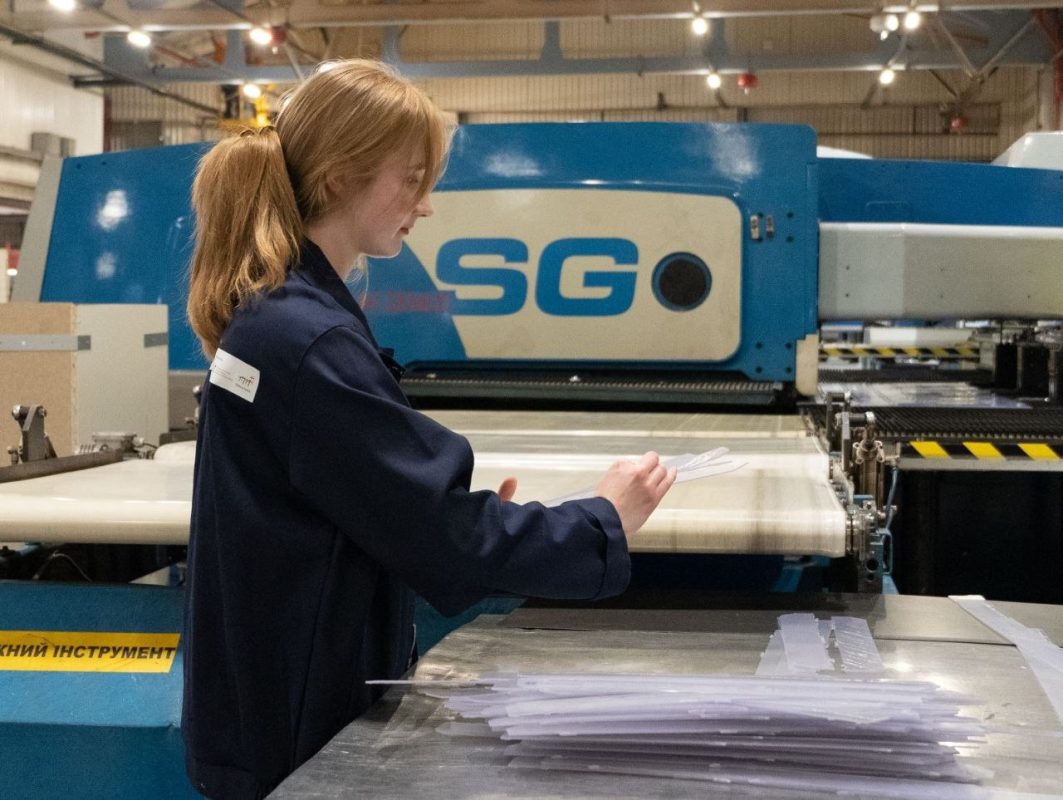
Over the course of a year, the college updated its training programme for maintenance fitters, integrating STEM approaches, 3D modelling, work with CAD/CAM systems and computer numerical control technologies. The institution received a FANUC training simulator, licensed SolidWorks Professional software and modern CNC equipment.
For many students, this was their first introduction to technologies currently used by modern enterprises. Daryna was particularly fascinated by 3D modelling in SolidWorks.
“At first, it seemed very complicated, but over time I realised just how many possibilities 3D modelling offers. You start with simple lines and sketches, gradually create a shape and add the necessary elements. Then you see the finished three-dimensional model of a component that you have created yourself,” the student says.
Through the training, Daryna mastered modern manufacturing technologies, developed her spatial thinking and learned to better understand how mechanisms work. The support of her teachers also helped her overcome her fear of making mistakes and tackling complex tasks.
“There were times when I configured the settings incorrectly or did not get the result I expected. But the teachers explained that making mistakes is normal. This helped me stop being afraid of difficult tasks,” Daryna recalls.
Another important outcome of the project was stronger cooperation between the college and employers. Students were given opportunities to undertake practical training at modern enterprises, including Modern-Expo and BAS Motor. For Daryna, this was her first experience of working at a large manufacturing facility and an opportunity to apply her skills in a real working environment.
“When you visit a modern enterprise for the first time and see the production areas, equipment and manufacturing processes, everything seems very complicated. But the mentors and employees were always ready to help, offer advice and explain anything I did not understand. If something did not work out the first time, they showed me how to do it better next time,” she says.
Training with modern technologies and practical experience at an enterprise helped Daryna gain a better understanding of her future profession and overcome her uncertainty. After graduation, she plans to work in automotive technology and modern manufacturing: “I want to work in my chosen profession, gain experience and develop my professional skills. Technologies are constantly evolving, so a good specialist must develop alongside them.”
Daryna shared her story at the project’s closing event, held in Lutsk on 26 May 2026. She encouraged young people not to let fear and stereotypes determine their career paths.
“You should not give up on your dream because of fear or other people’s expectations. If someone is genuinely interested in something, they have the right to try it. Sometimes the best decisions in life begin precisely where we are most afraid to take the first step,” Daryna emphasises.
Background
The Multi Donor Initiative Skills4Recovery is jointly co-financed by the European Union, Germany, Poland, Estonia, and Denmark. It is implemented by Deutsche Gesellschaft für Internationale Zusammenarbeit (GIZ) GmbH and the Solidarity Fund PL (SFPL).