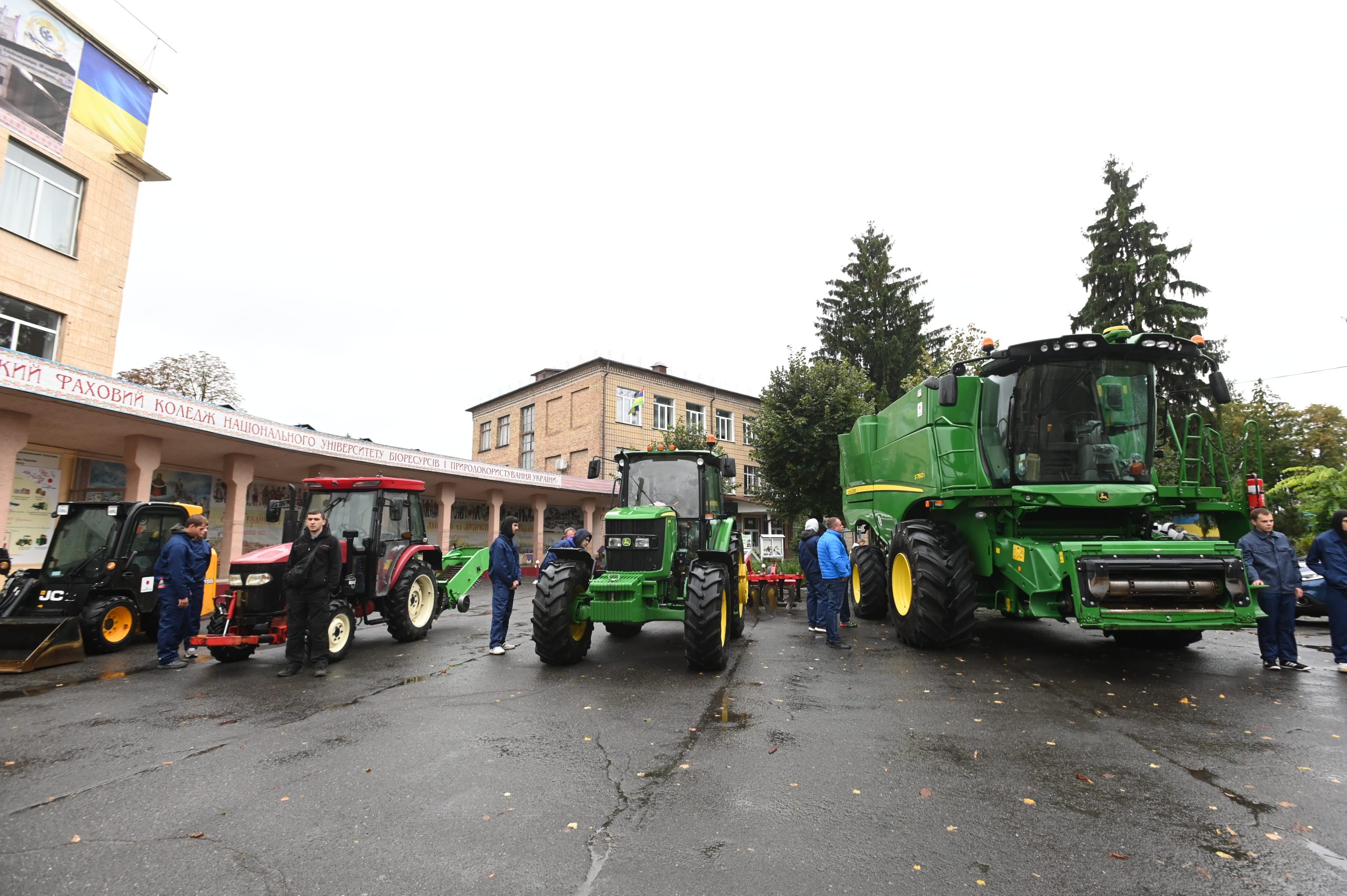
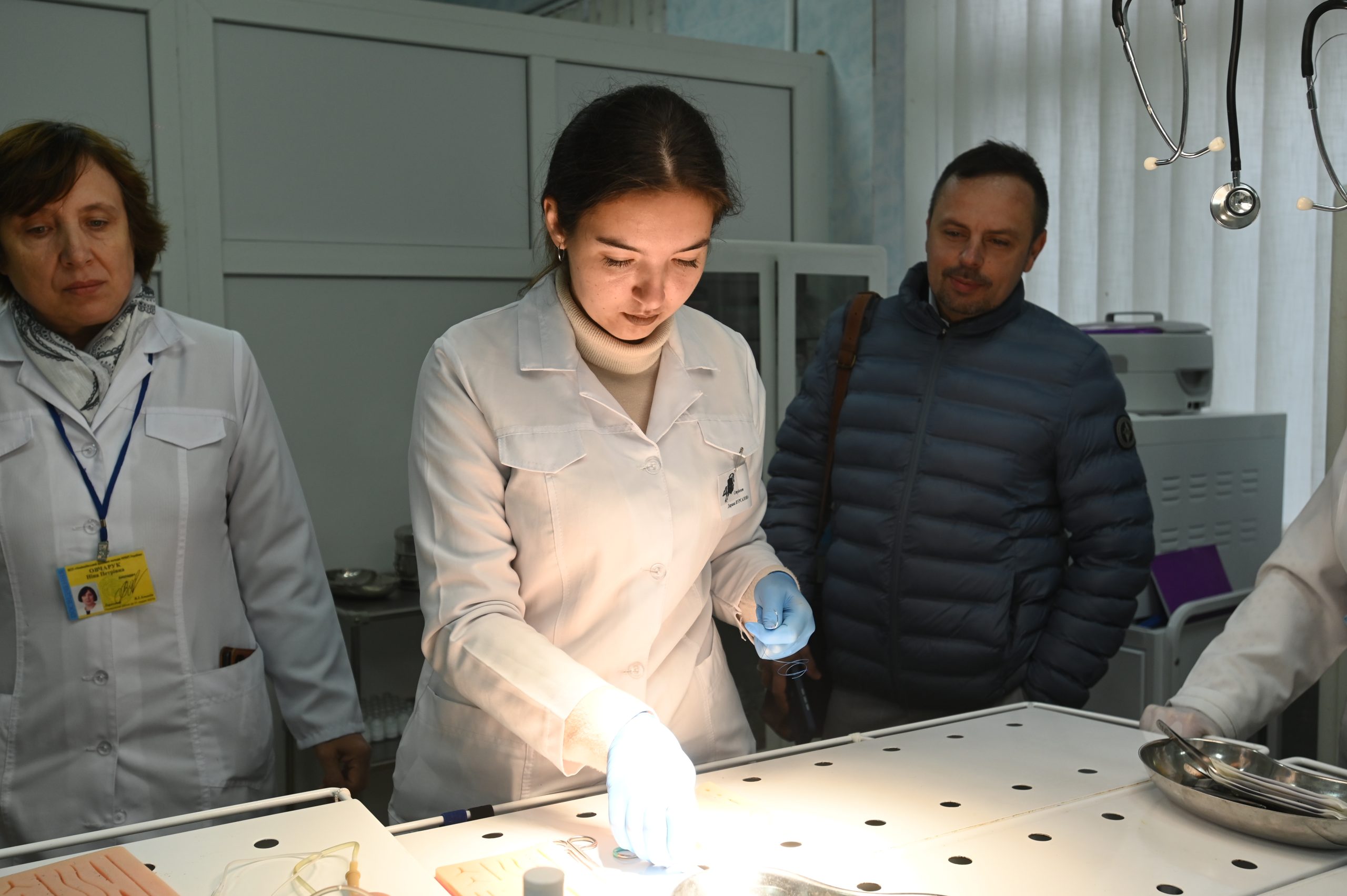
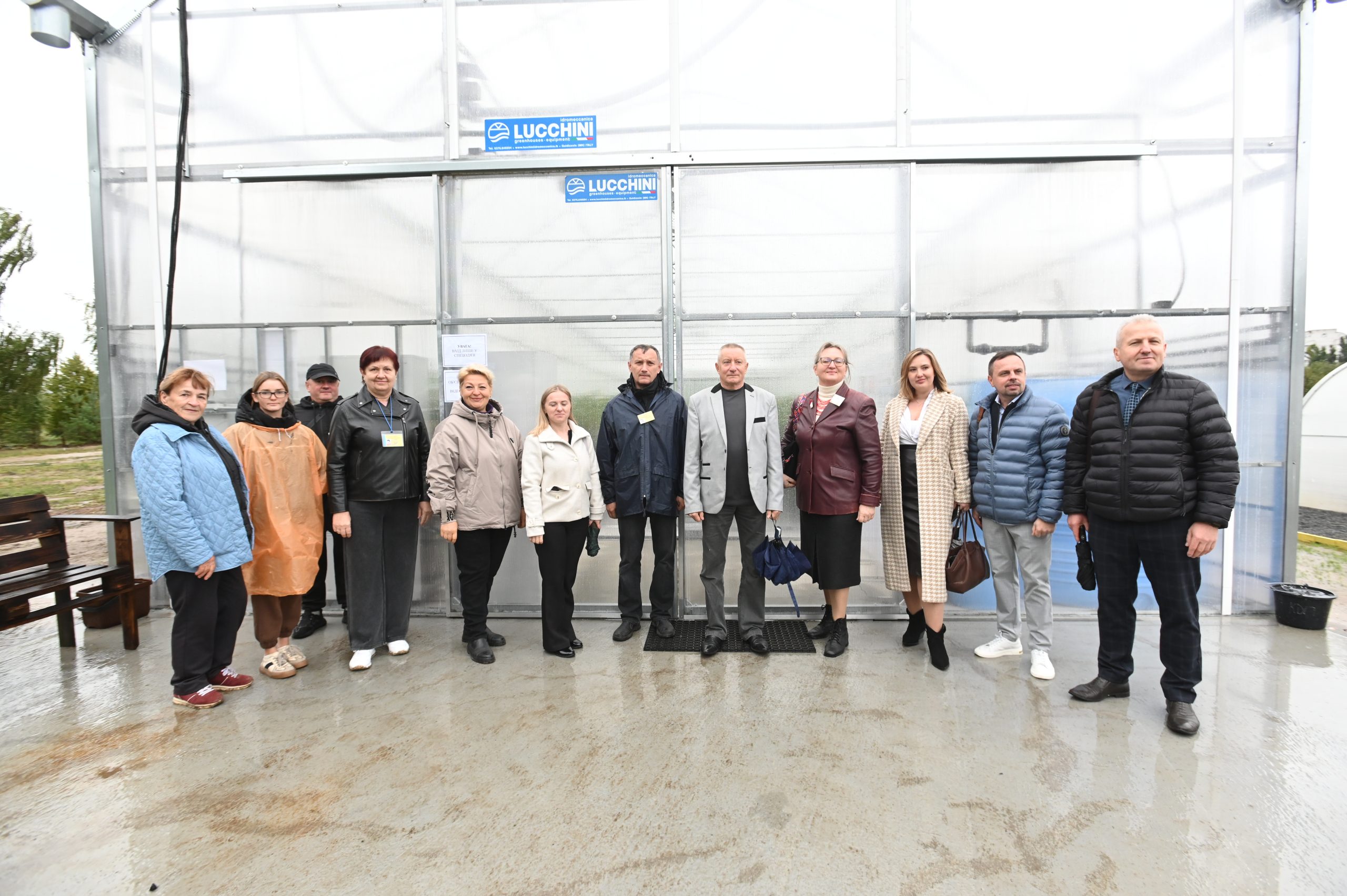
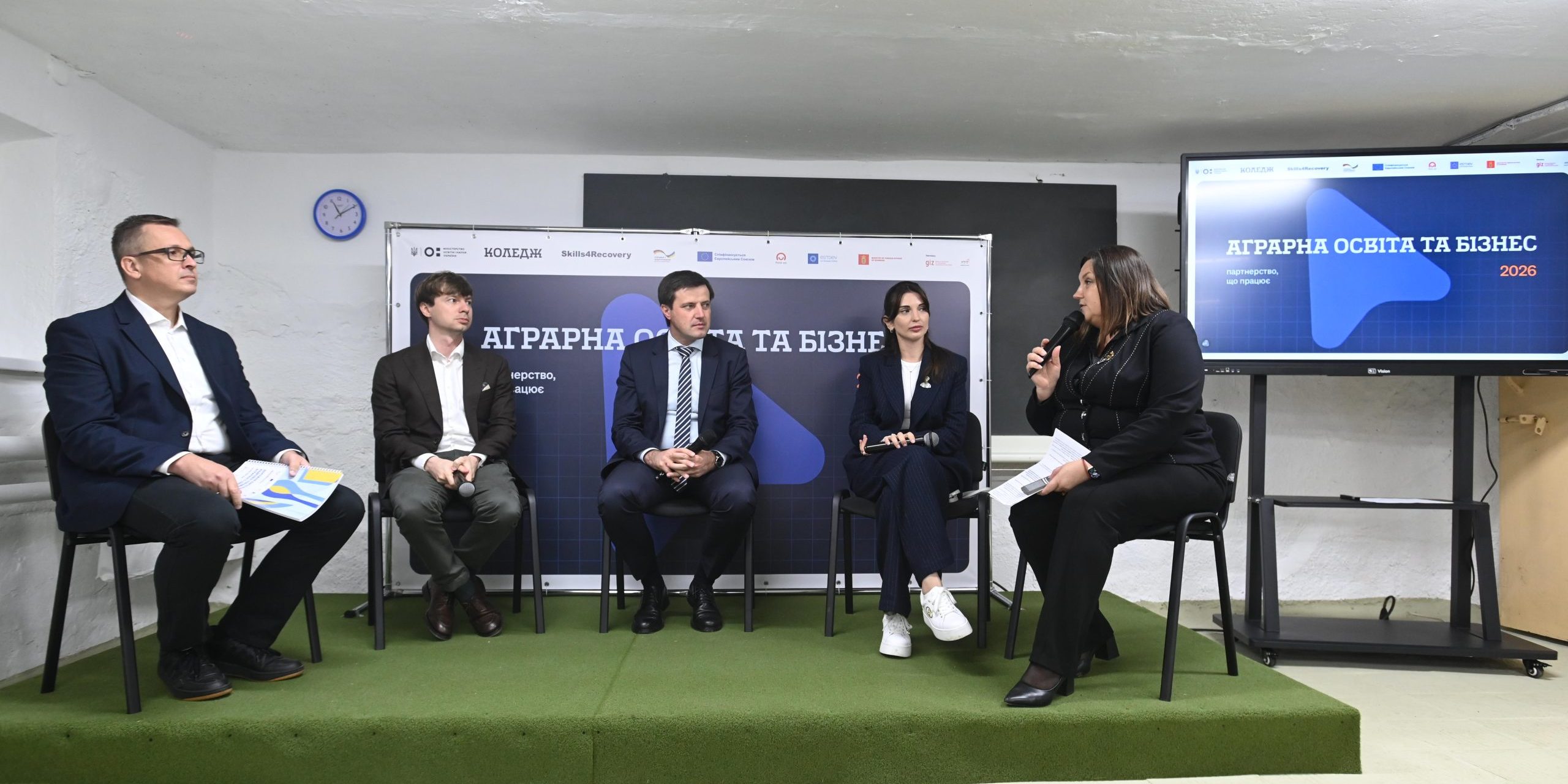
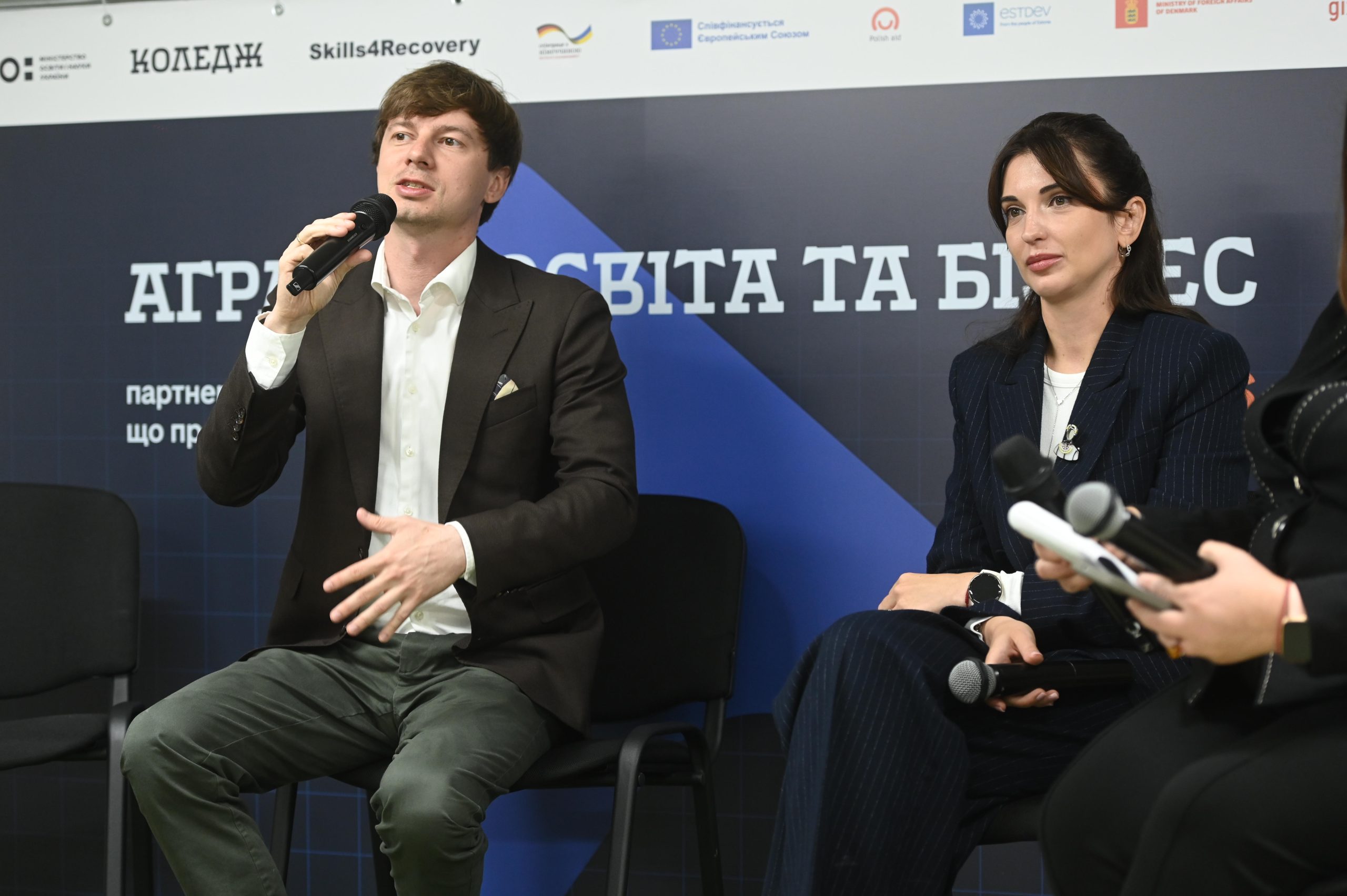
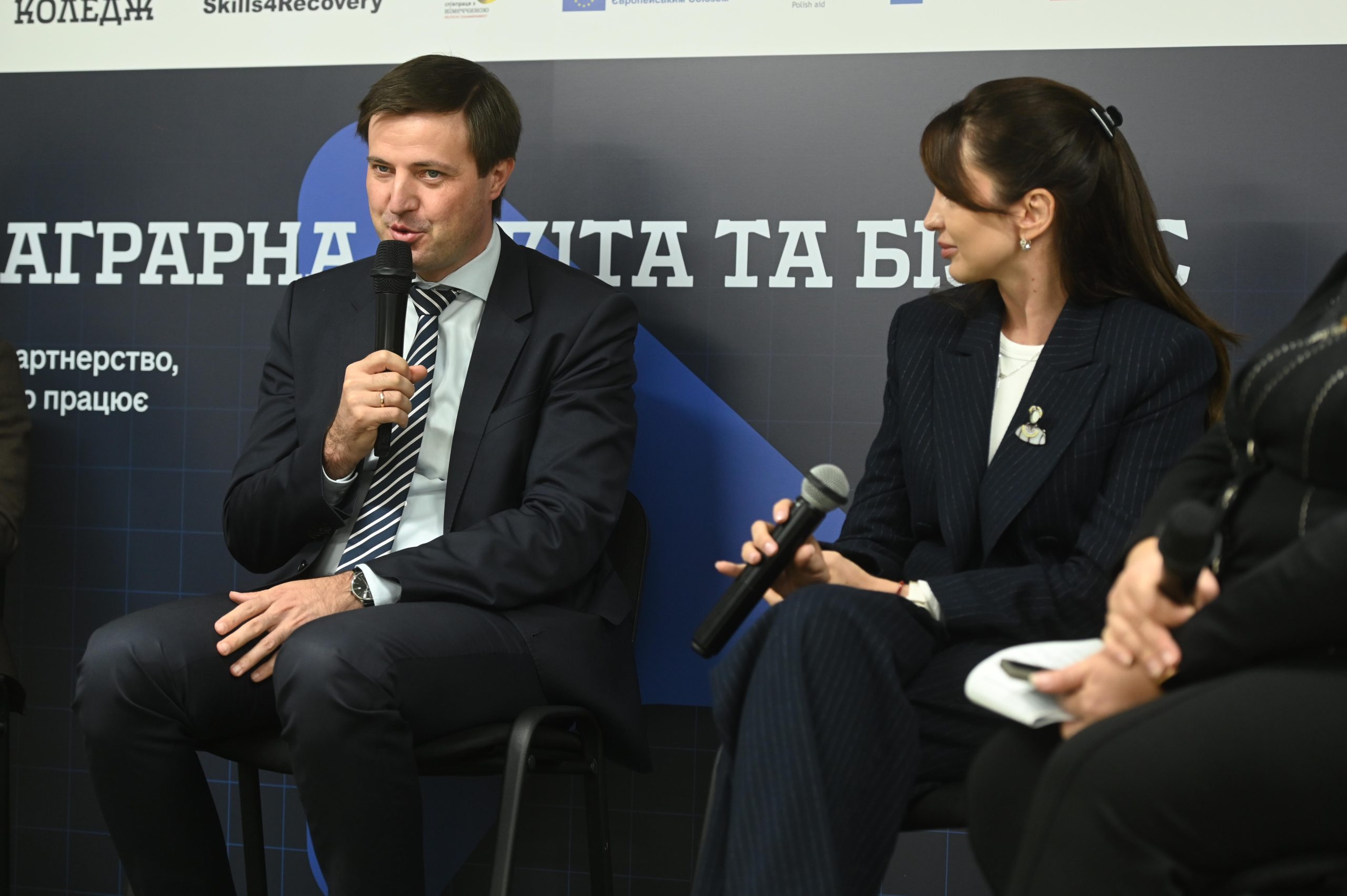
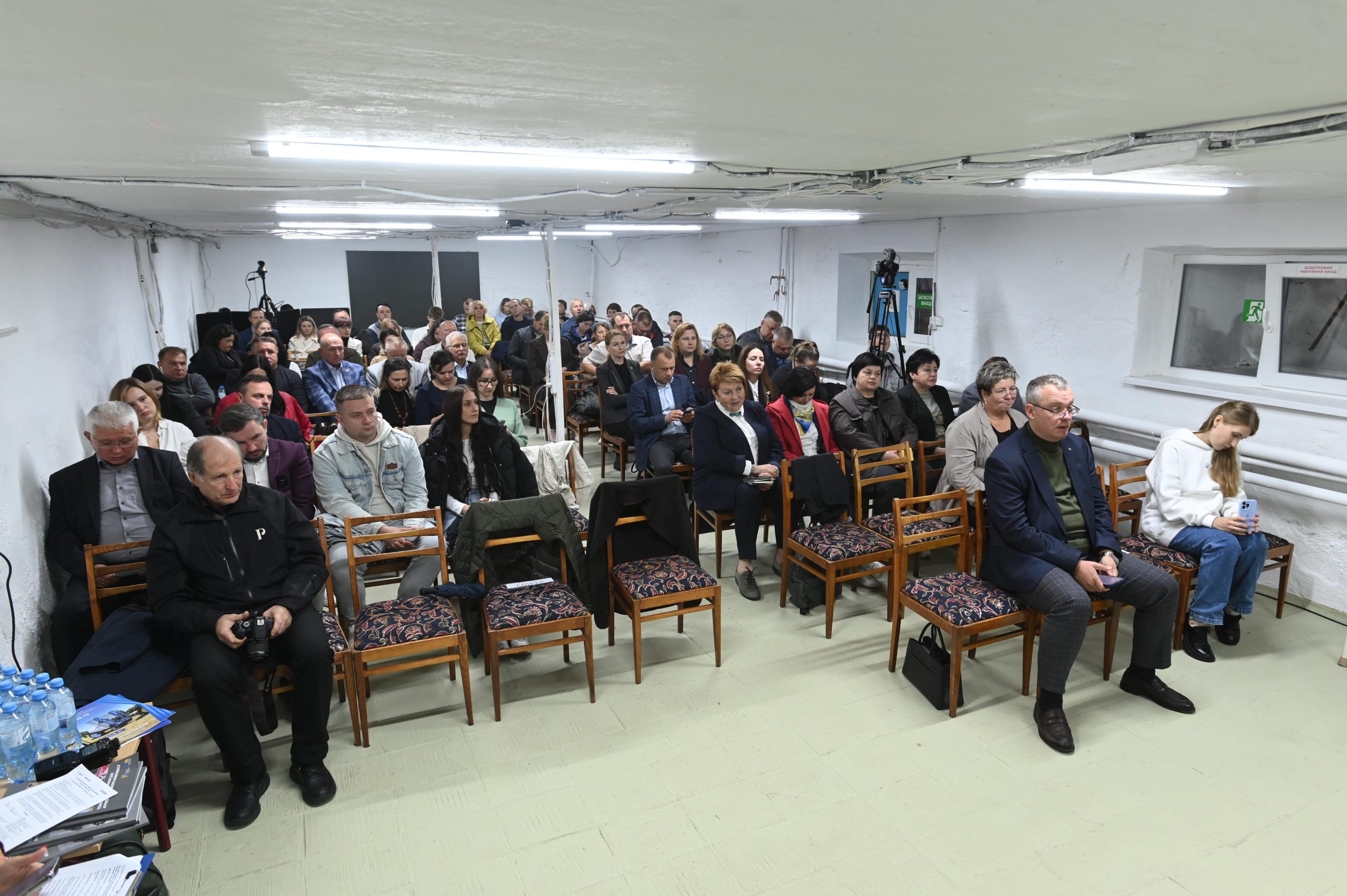
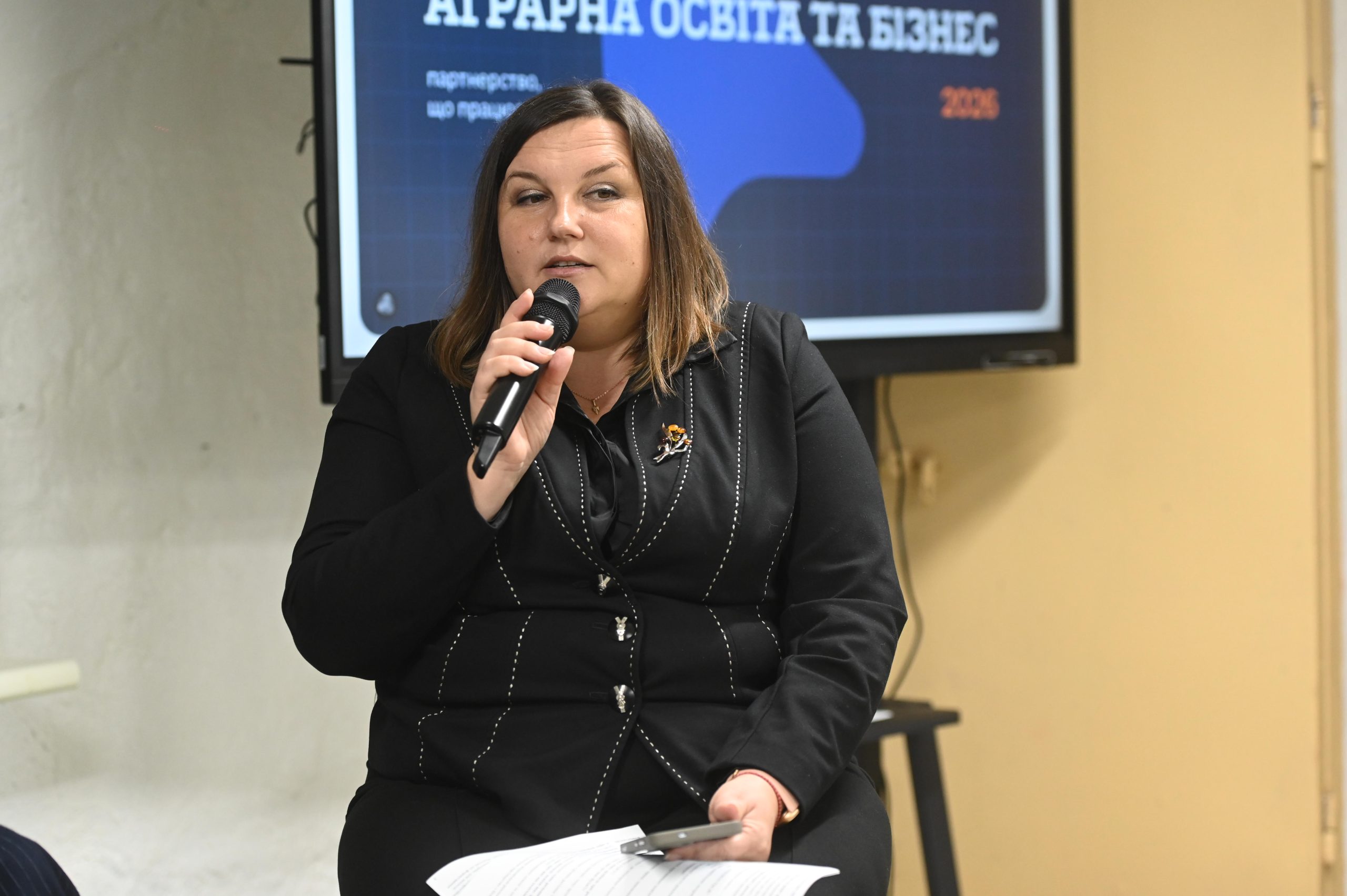
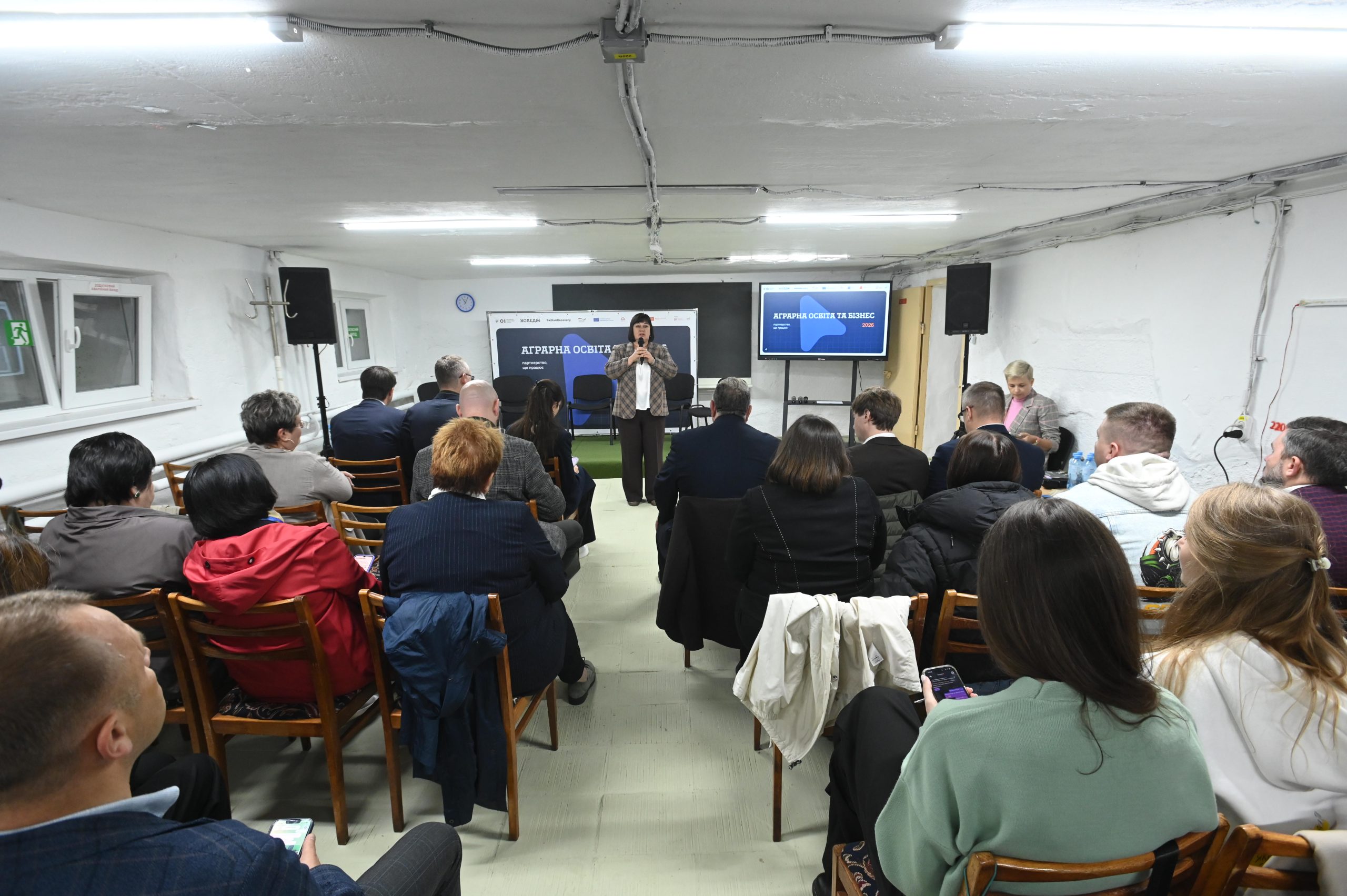
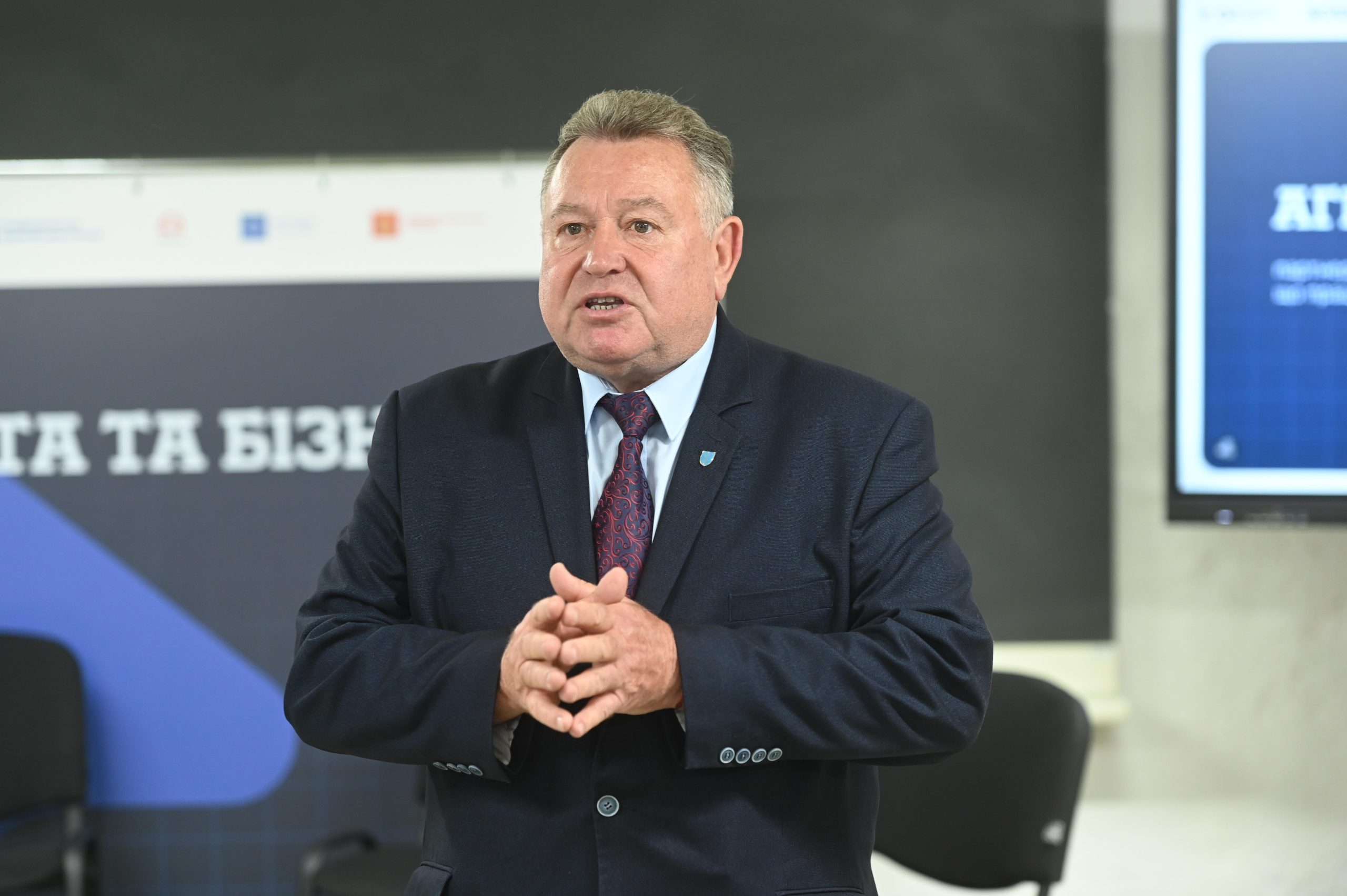
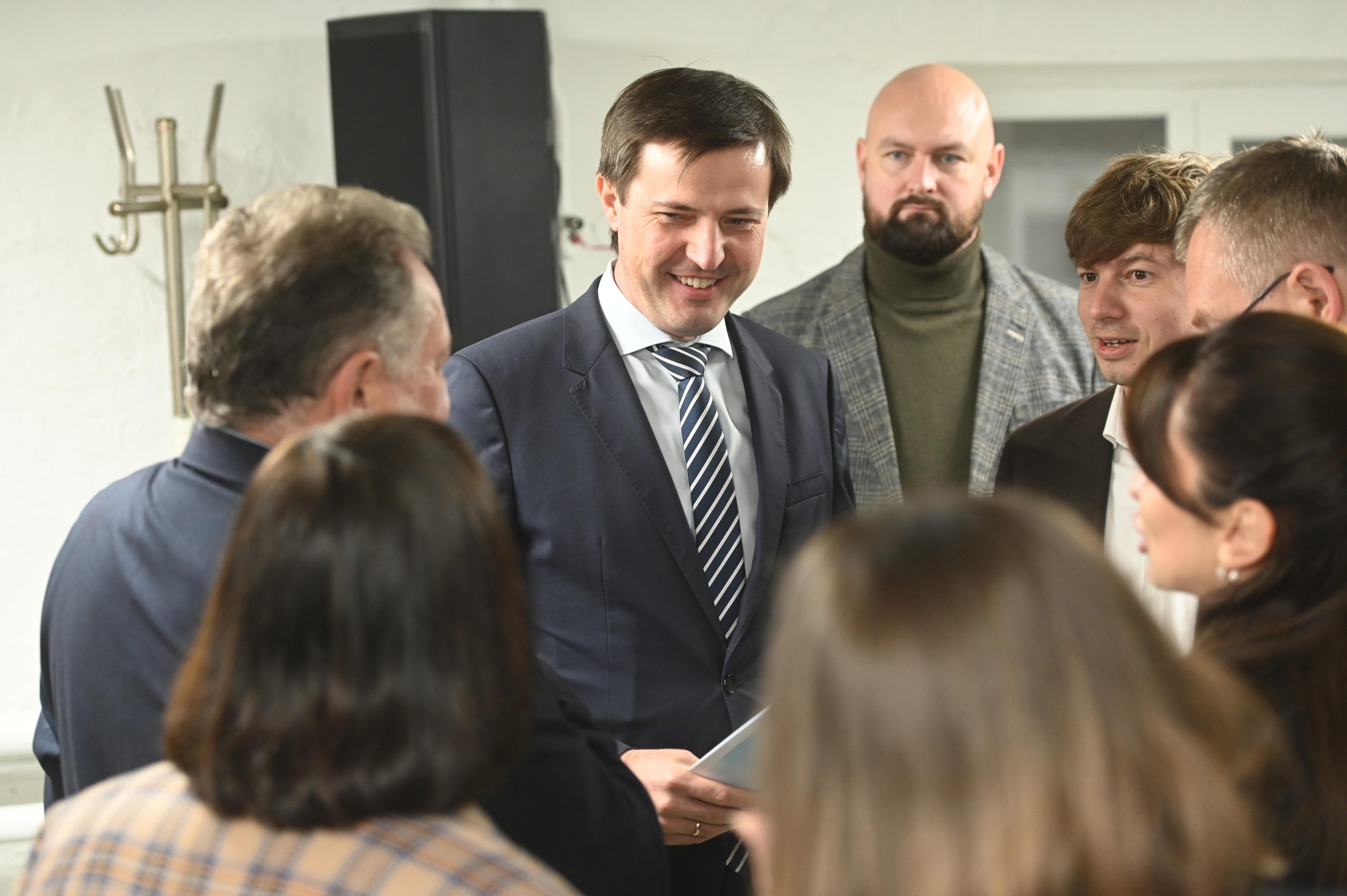
The All-Ukrainian Forum for Heads of Agricultural Vocational and Professional Pre-Higher Education Institutions, “Agricultural Education and Business 2026: Partnership in Action”, took place at Nemishaieve Professional College of the National University of Life and Environmental Sciences of Ukraine. The event was organised by the Ministry of Education and Science of Ukraine with support from the Multi Donor Initiative Skills4Recovery.
The forum brought together more than 100 participants, including heads of agricultural education institutions, business representatives, representatives of industry associations, government bodies and international partners. Together, they explored a practical question: how can education and business work together to ensure that companies can recruit people with the skills they need?
“The agricultural workforce is already being trained at institutions such as Nemishaieve Professional College. This forum is intended to help education institutions and businesses connect, explore the available forms of cooperation and start working together now. The best results are achieved when employers become partners in workforce training and education institutions are open to cooperation and ready to update their training in partnership with business,” said Dmytro Zavhorodnii, Deputy Minister of Education and Science of Ukraine, in his opening address.
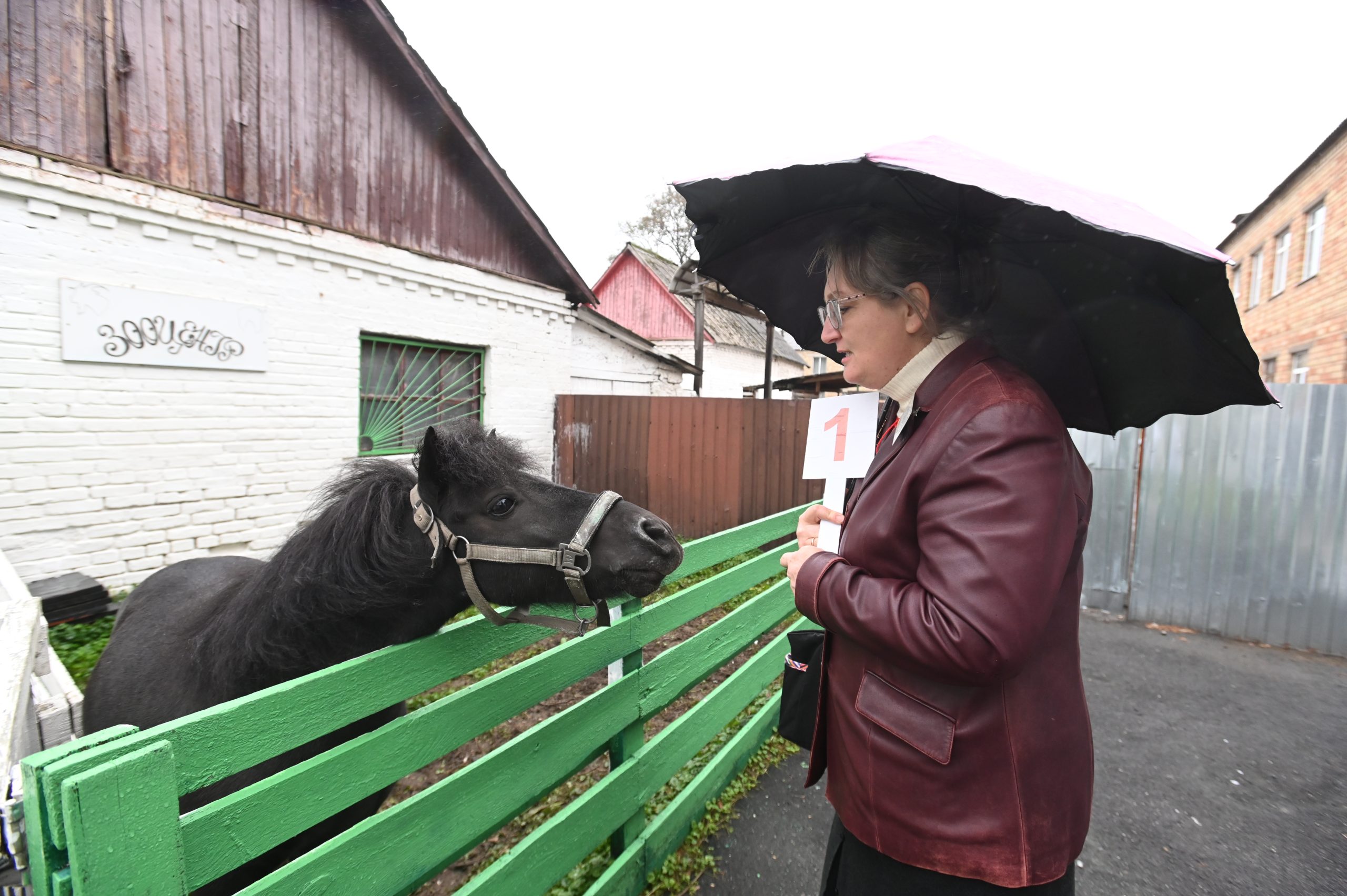
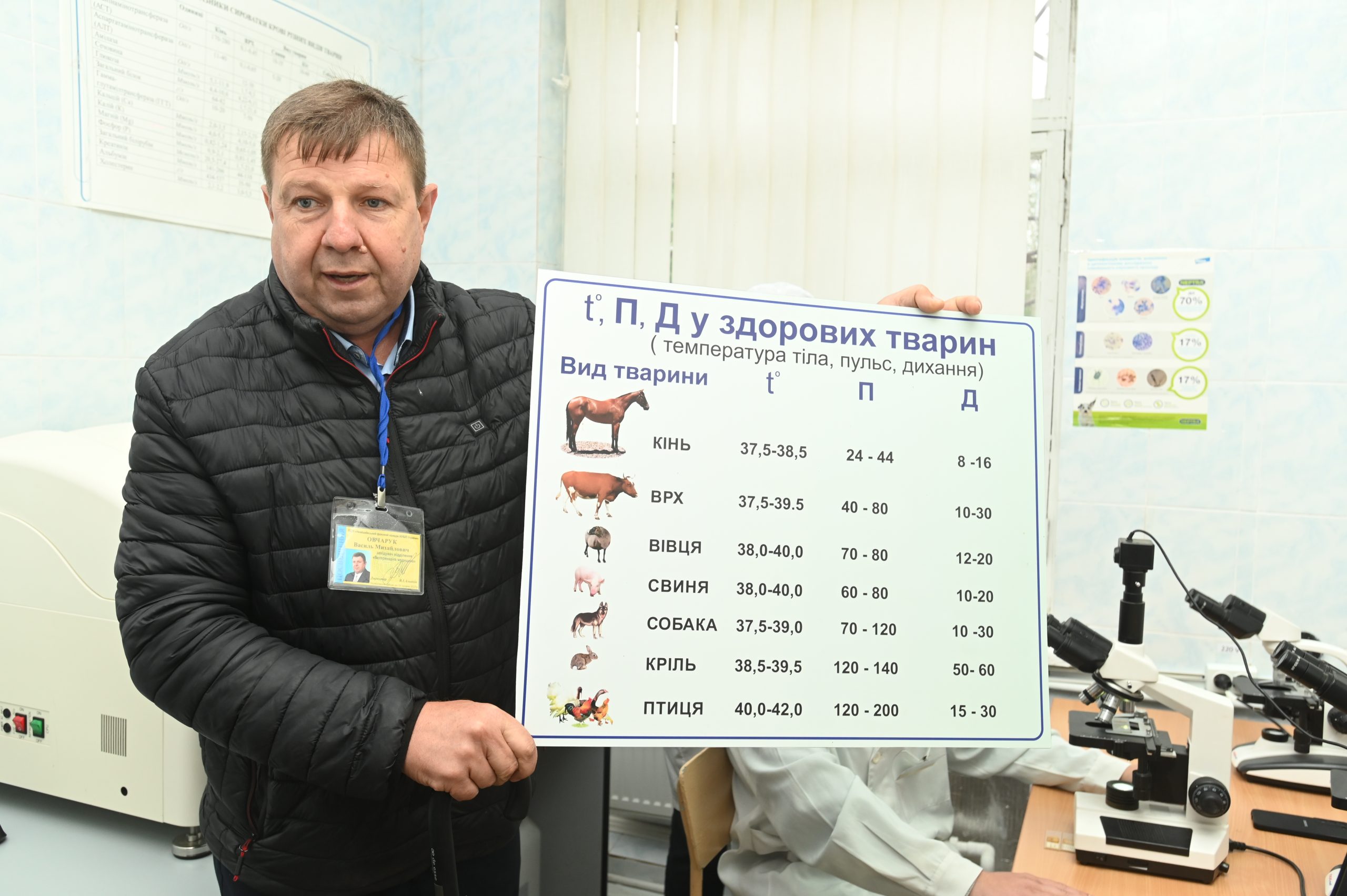
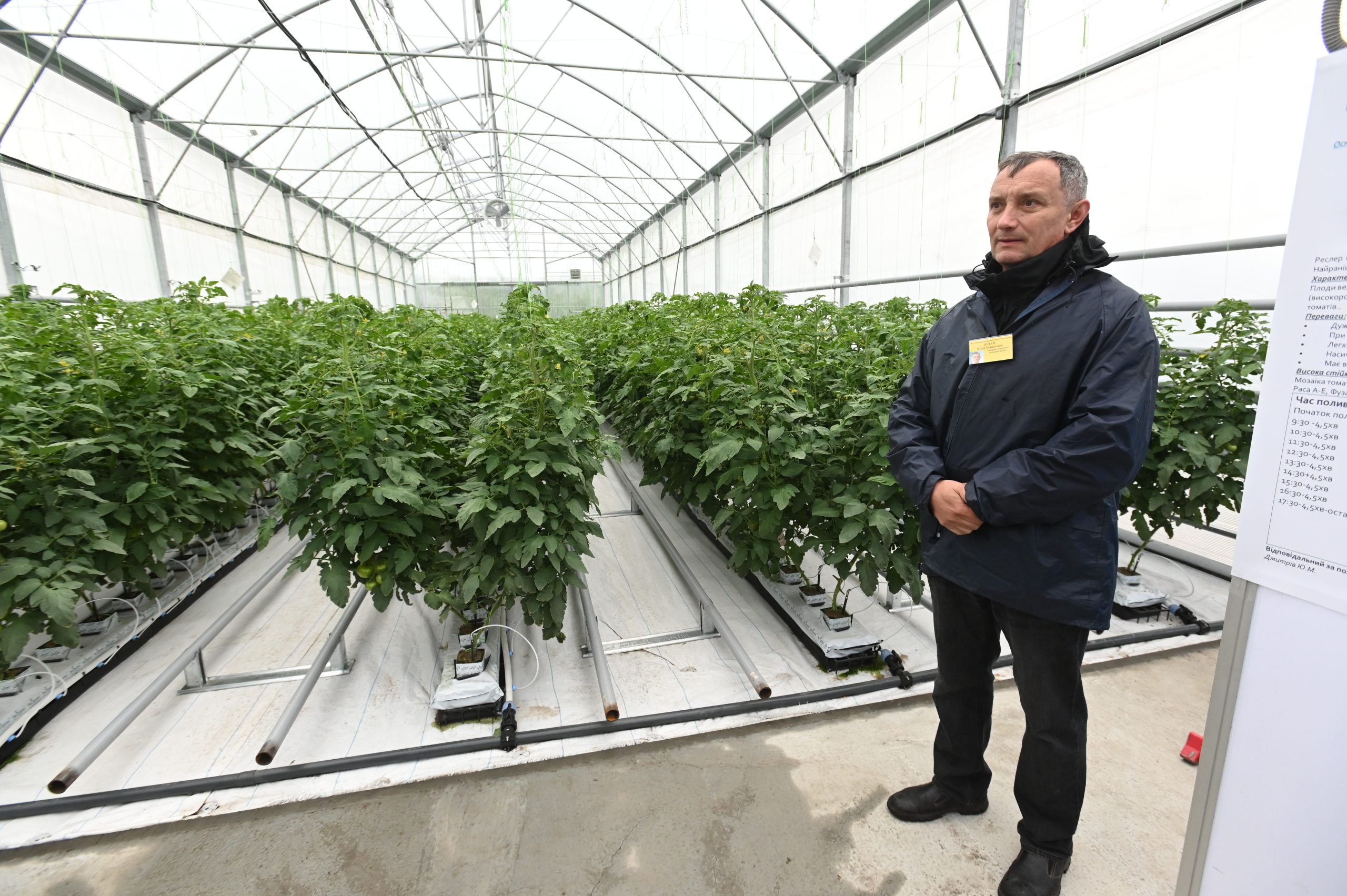
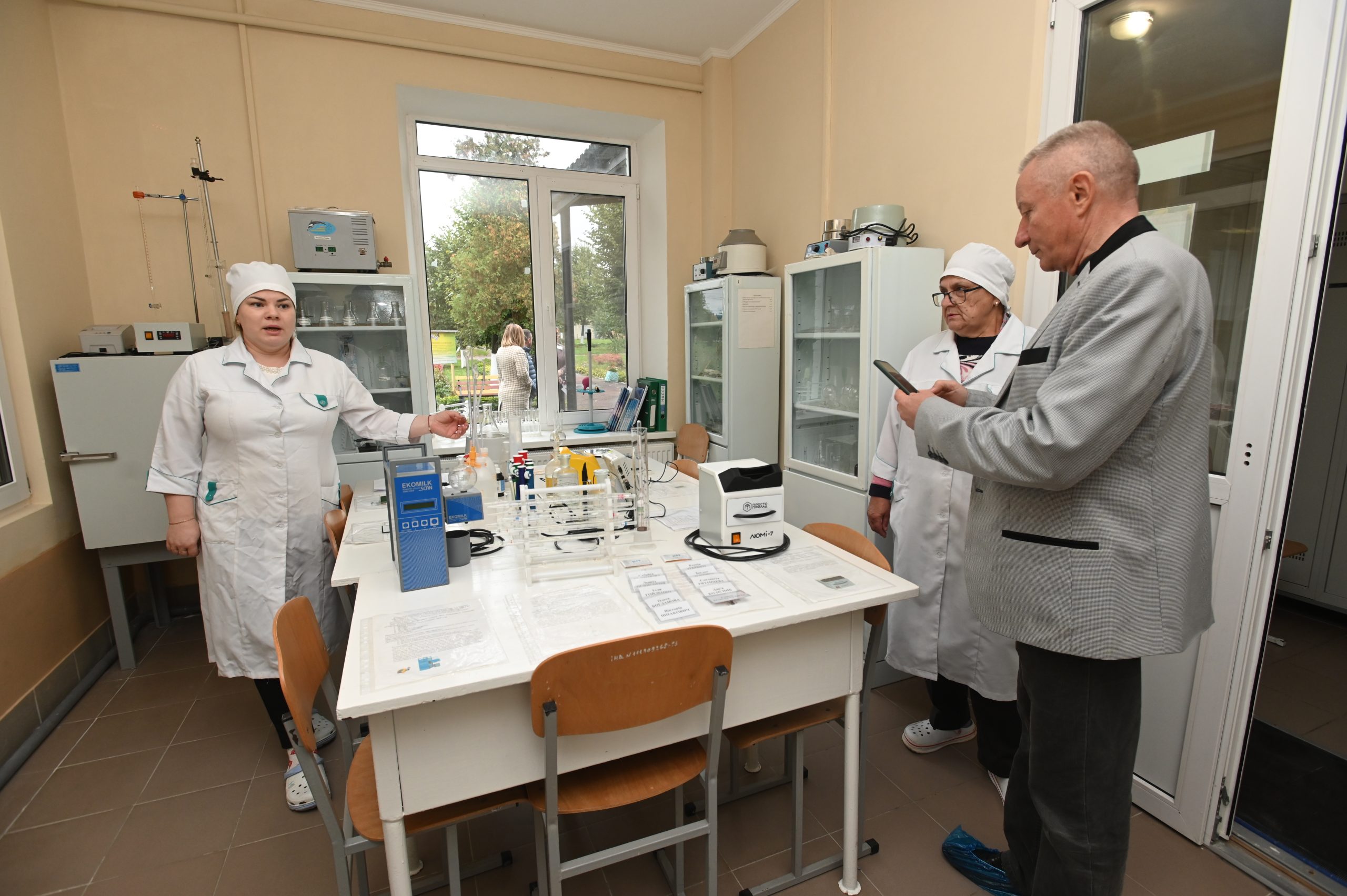
The choice of venue was significant. Nemishaieve Professional College was under Russian occupation, lost some of its equipment and, after the area was liberated, restored its educational infrastructure with support from its partners. Today, its experience of recovery, mobilising resources and developing its training facilities could be valuable to other education institutions. Here are the forum’s key findings.
Key finding 1. Education is changing to meet the needs of the agricultural sector
The agricultural sector faces a dual challenge: a shortage of workers and rising skills requirements.
“The agricultural sector is constantly developing, and the knowledge and skills professionals need are changing with it. That is why education and business need to work together: employers should share their needs, and education institutions should take them into account when developing curricula and practical training. This cooperation will help train the professionals the agricultural sector needs today and in the future,” said Taras Vysotskyi, Minister of Agrarian Policy and Food of Ukraine.
The training system is already changing in response to these needs. Legislation, standards, model curricula and approaches to developing competencies are being updated. The vocational education reform gives colleges greater autonomy, including in developing educational programmes and working with employers. At the same time, standards and approaches in professional pre-higher education are being improved so that the content of training better reflects the needs of today’s labour market.
Forum participants discussed how to update educational programmes, forecast the sector’s needs over the next three to five years, engage employers and consider learners’ journey from choosing a profession to gaining a qualification and finding employment.
Key finding 2. Addressing the agricultural sector’s workforce needs requires coordinated action by the government, education institutions, employers and communities
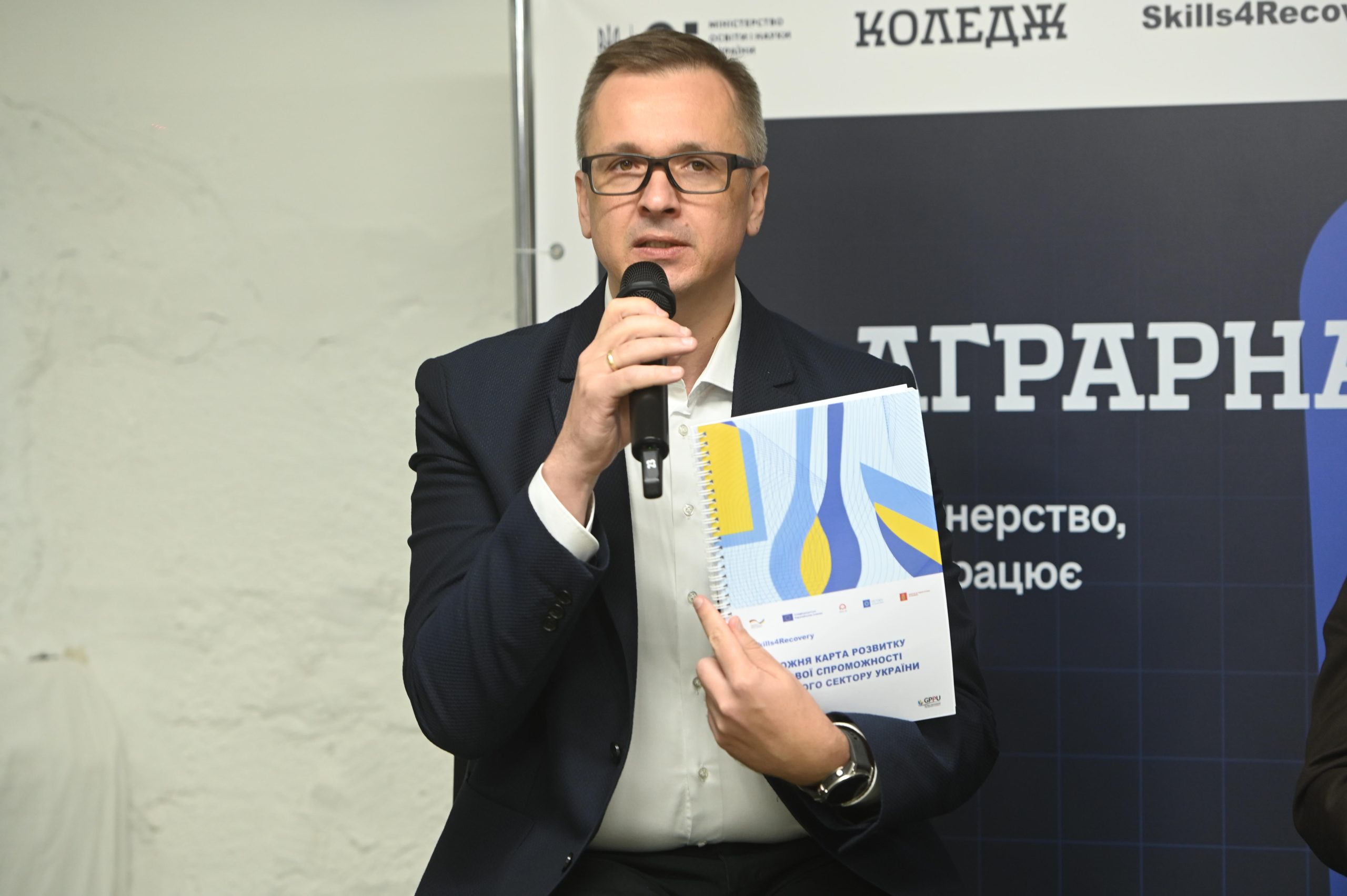
This is the approach set out in the Roadmap for Developing the Workforce Capacity of Ukraine’s Agricultural Sector for 2026–2030, developed as part of Skills4Recovery. The document sets out seven strategic objectives, including expanding short-term training and retraining, modernising education, building partnerships with business, aligning qualifications with EU approaches and expanding access to learning. Each objective includes specific activities, those responsible, timelines and performance indicators.
“The roadmap provides a systematic overview of the agricultural sector’s workforce needs. It helps identify skills shortages, direct resources where they are most needed and align education and workforce initiatives. This is important for the recovery and resilience of the agricultural sector, as well as for aligning it with European approaches,” said Oleksii Oleksiuk, Component Lead for the Multi Donor Initiative Skills4Recovery, GIZ.
Key finding 3. Partnerships should begin before a position needs to be filled
Businesses do not need to wait for qualified workers to enter the labour market: future skilled workers are already studying at institutions providing vocational and professional pre-higher education. The most effective partnerships begin earlier, when employers help identify the skills required, shape educational programmes and organise practical training.
The forum explored practical ways to work together, including work placements, dual education, employer involvement in developing educational programmes and participation in supervisory boards. Representatives of MHP, Kernel and Nemishaieve Professional College of the National University of Life and Environmental Sciences of Ukraine shared examples from their own experience.
Education institutions also have a role to play. They can approach employers, invite them to discuss their needs and agree on the first steps towards cooperation.
Forum participants concluded that a lasting partnership involves more than a single project or work placement. It requires an ongoing cycle: identifying workforce needs, developing training together, providing practical experience, helping graduates find work, gathering feedback and updating educational programmes.
Key finding 4. Modern training requires a modern learning environment
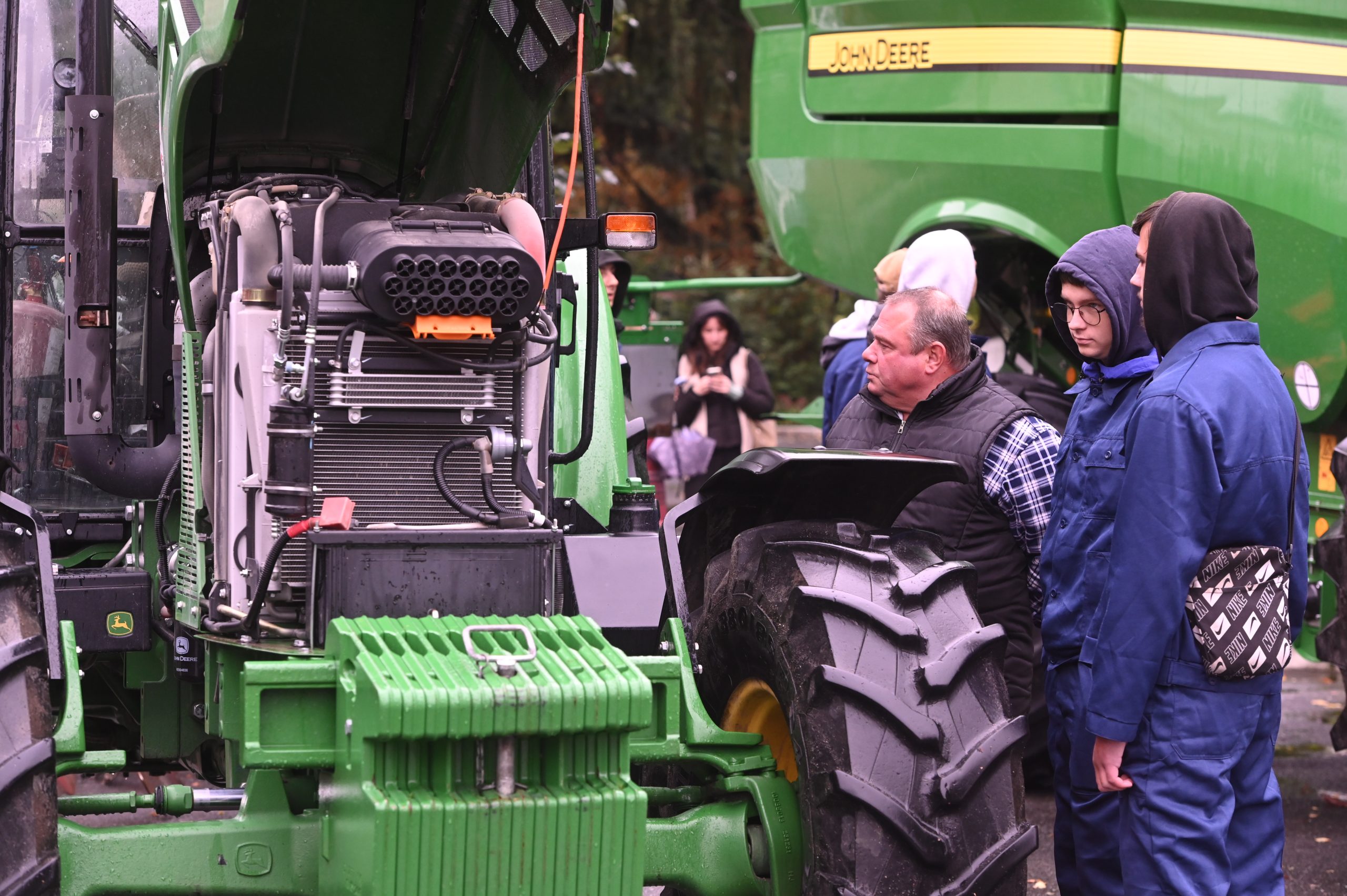
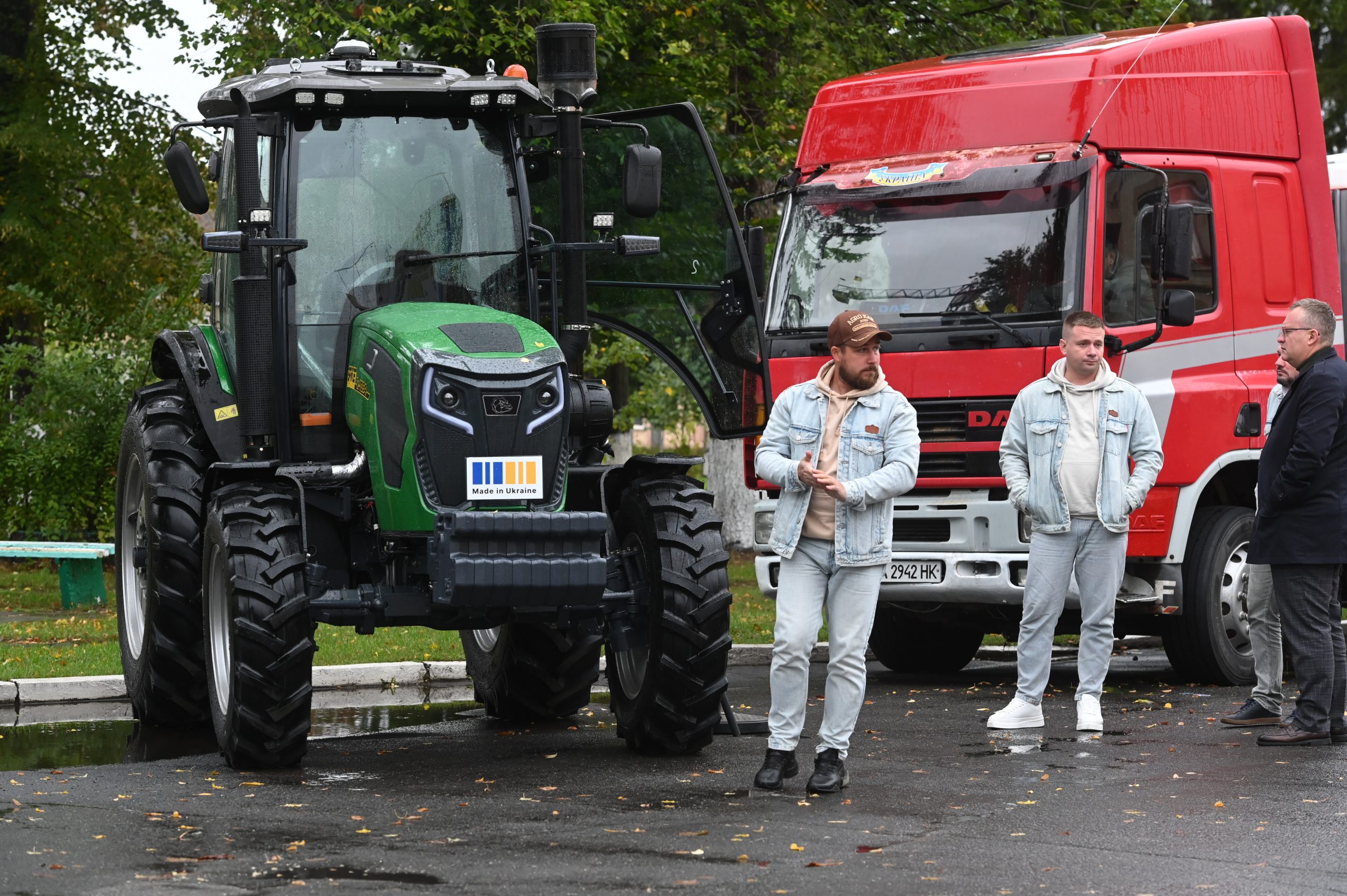
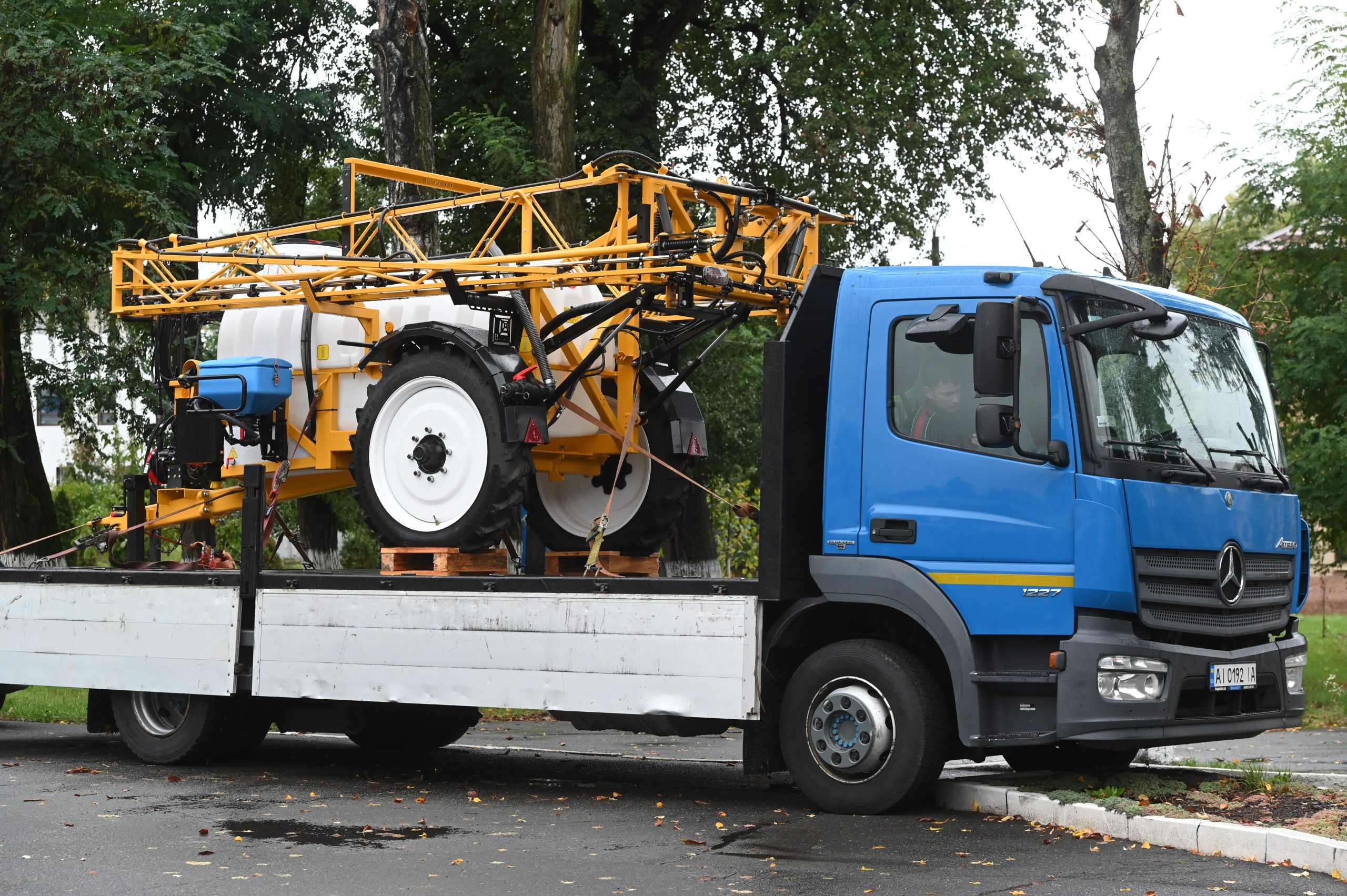
Students need access to modern equipment to learn how to use the technologies they will encounter in the workplace. At the same time, a college does not need to own all the equipment itself. What matters is ensuring that students can access it.
Colleges’ land, property, production facilities, farms and machinery can serve not only as a material base for training, but also as resources for development and modernisation. For example, they can be used to establish demonstration fields, test new technologies, put precision-farming technologies into practice and share equipment.
Further opportunities can come from partnership projects with businesses, investment in training facilities, public-private partnerships, international technical assistance and co-financing.
Astarta-Kyiv, Agro Car Ukraine and ORION.GROUP presented their approaches to modernisation and cooperation with colleges. College leaders from Katuzhanskyi, Korostyshivskyi, Pivnichnyi and Nemishaieve shared their experience of developing training and production facilities and mobilising resources.
Key finding 5. Starting a partnership is easier than it seems
There is no need to spend years preparing or make major investments at the outset. It is enough to understand what opportunities are already available and how to make use of them.
The Ministry of Education and Science and Skills4Recovery have announced the launch of the national communications campaign “Find the talent where it is being trained”. The campaign will showcase successful partnerships between companies and colleges and guide businesses through the process, from identifying their workforce needs and choosing a form of cooperation to finding a college partner, formalising an agreement and getting the partnership under way.
The campaign will run from September to November 2026 and will be delivered by the I’COMM communications agency. It will include meetings with employers, special media projects, a practical Business Navigator with a step-by-step guide to building a partnership, and a dedicated section for businesses on the Professional College platform. Follow updates on the Ministry of Education and Science’s website and social media channels.
Background
The campaign is supported by the Multi Donor Initiative Skills4Recovery. The Reform Support Team at the Ministry of Education and Science of Ukraine also contributed to its preparation and delivery.
The Multi Donor Initiative Skills4Recovery is jointly funded by the European Union, Germany, Poland, Estonia and Denmark. It is implemented by Deutsche Gesellschaft für Internationale Zusammenarbeit (GIZ) GmbH and Solidarity Fund PL (SFPL).