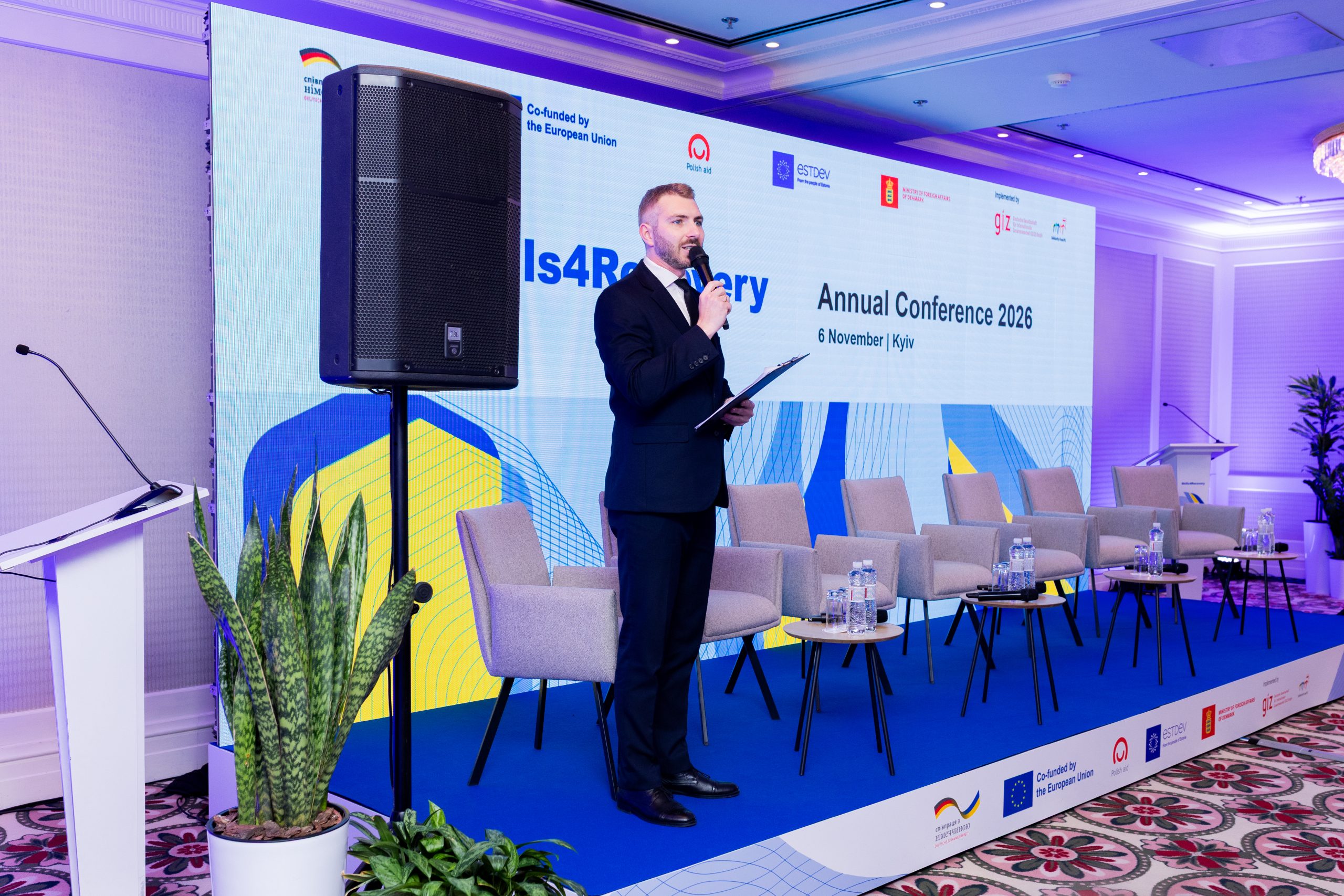
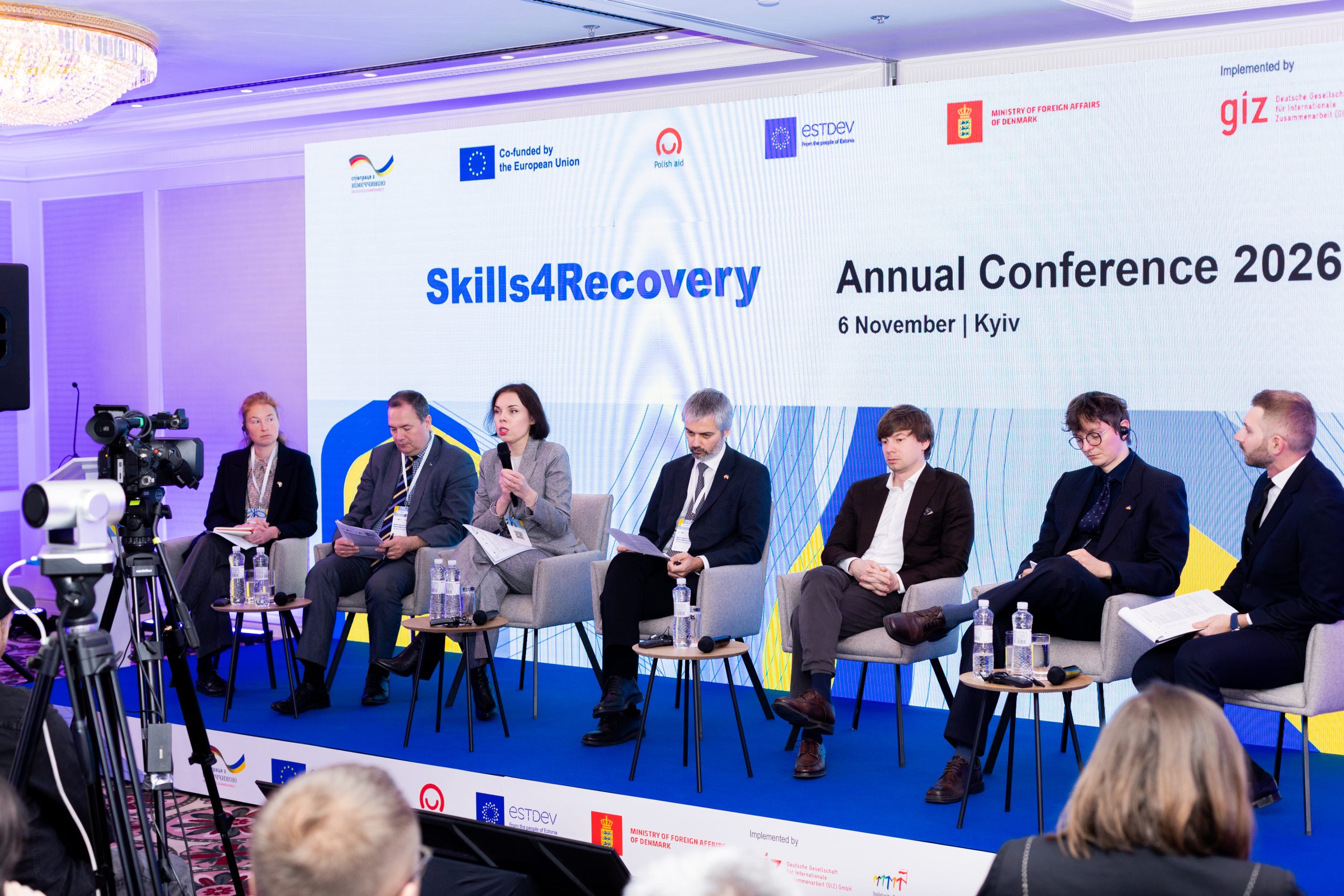
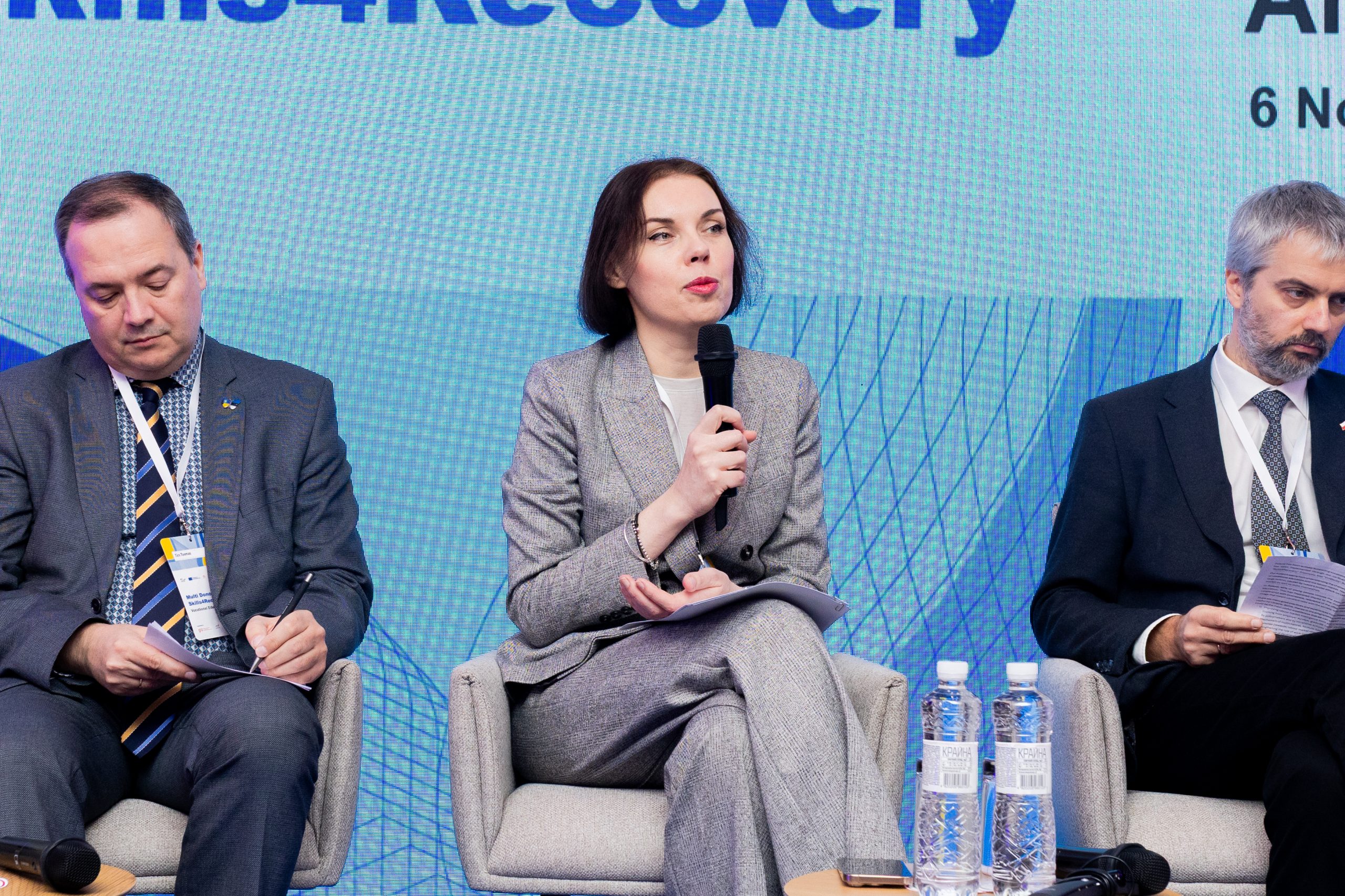
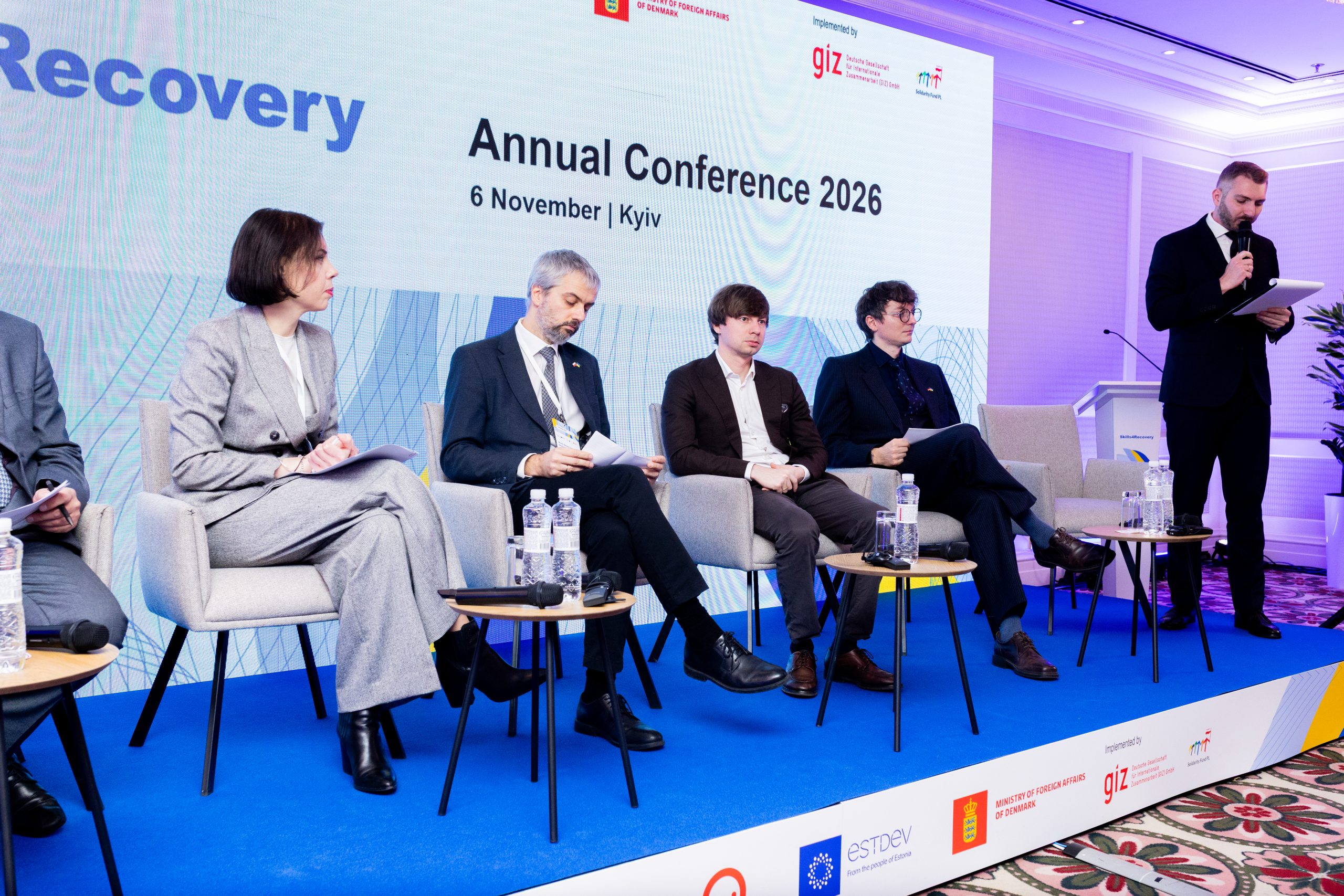
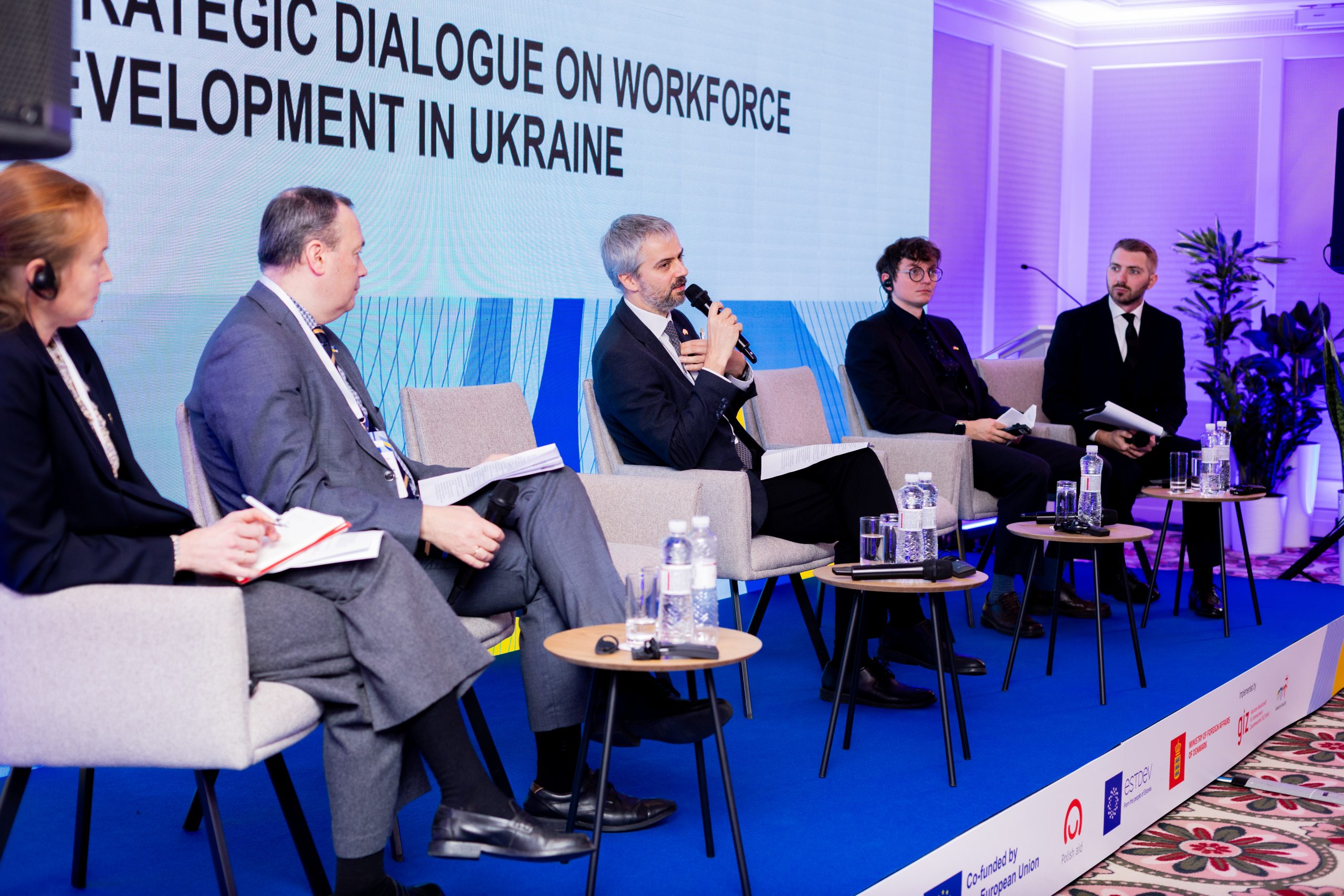
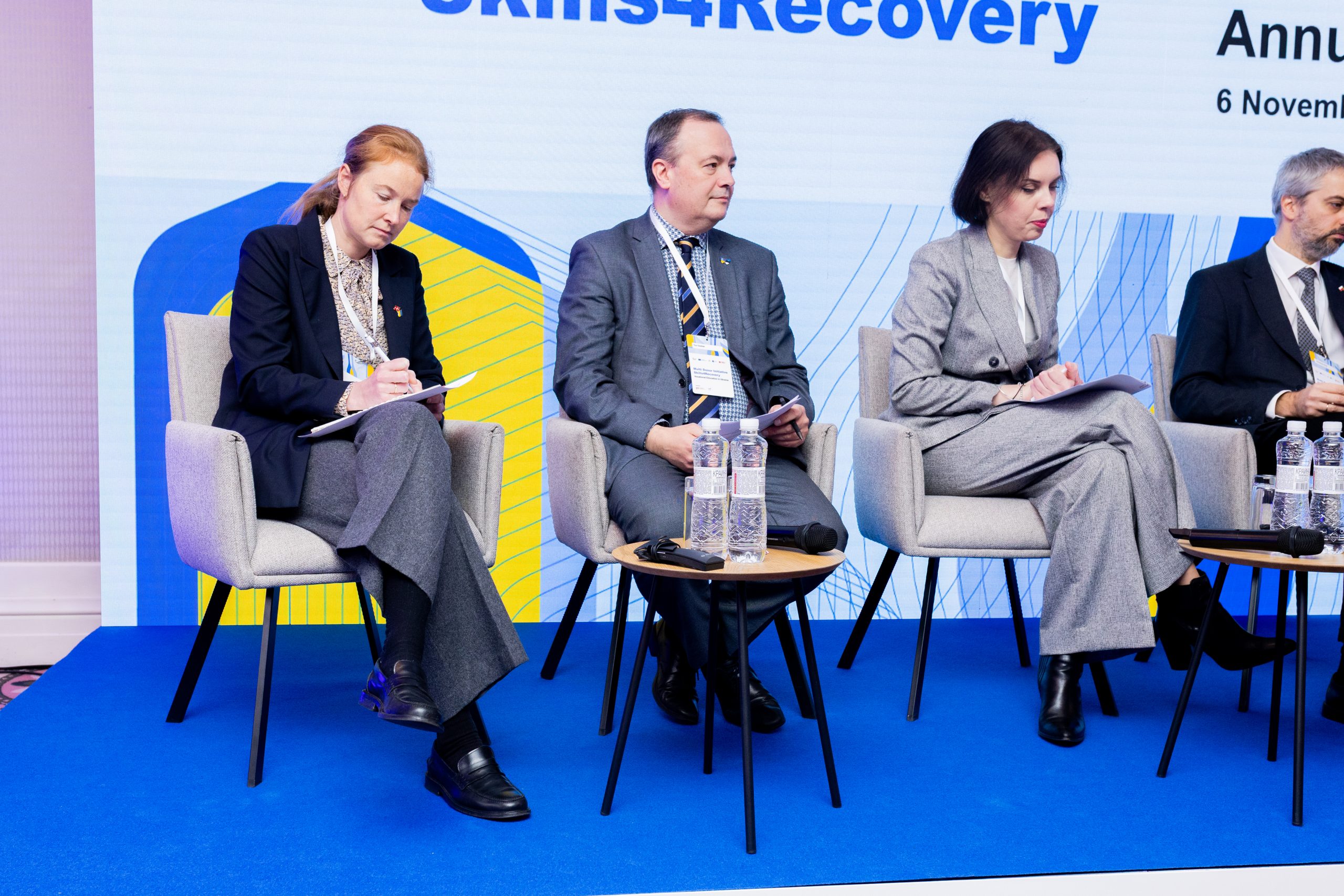
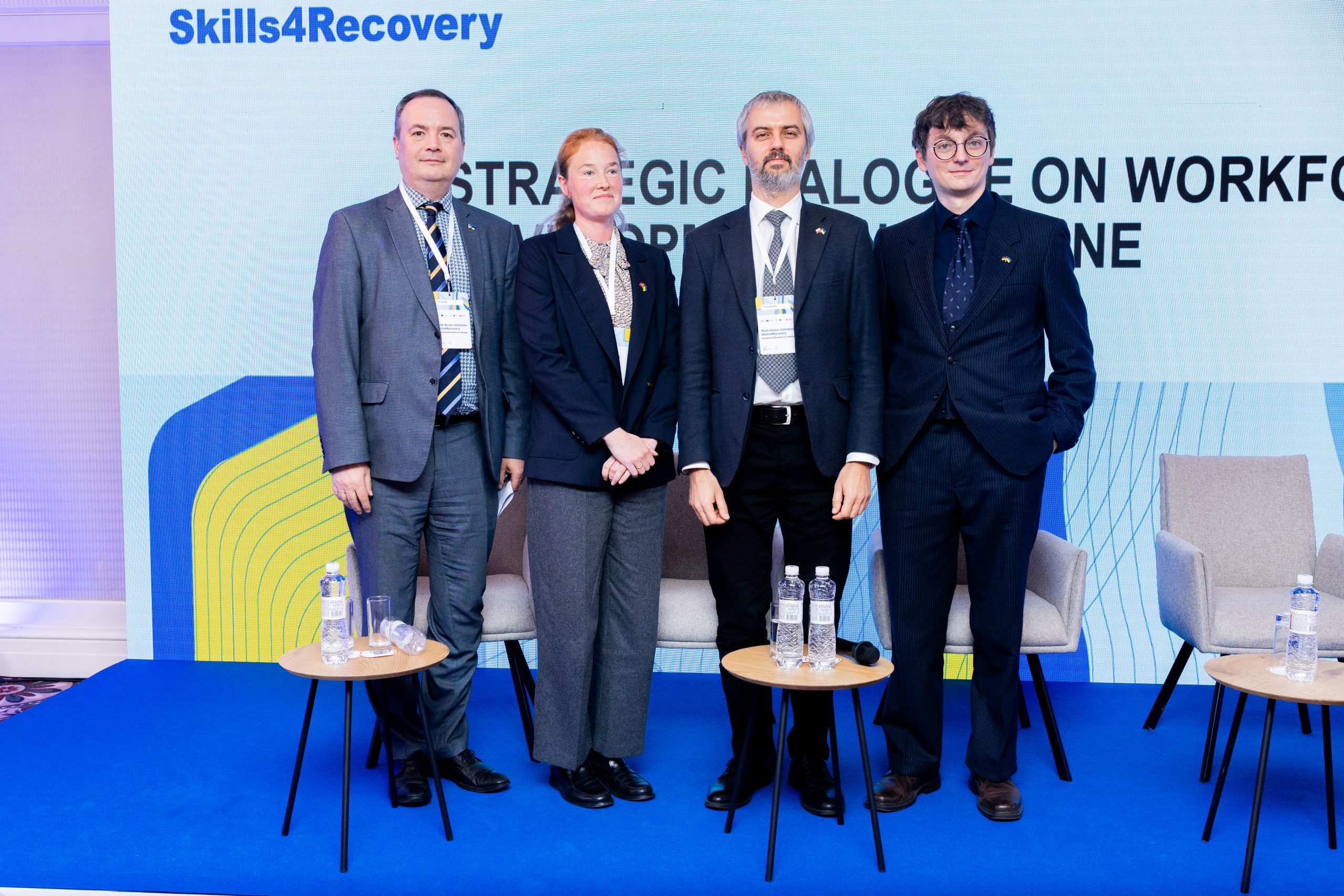
Skills4Recovery has supported reforms in vocational education and employment while helping more than 7,000 people gain new professional skills in Ukraine. The Multi Donor Initiative presented its achievements at its Annual Conference in Kyiv today, as its current phase approaches completion.
Jointly financed by the European Union, Germany, Poland, Estonia and Denmark, Skills4Recovery has worked with Ukrainian government institutions, vocational education and training (VET) providers and businesses since 2023. The conference brought these partners together to review progress, discuss future workforce needs and explore how successful approaches can be used more widely.
More than 7,000 people gained new skills through reskilling and upskilling programmes in cooperation with employers. Separately, improvements in teaching, equipment and training facilities benefited more than 25,000 people across 52 pilot VET providers. In total, 175 VET providers received support: 75 through institutional development measures and 100 through grants to replicate tested approaches.
To bring training closer to labour market needs, the initiative facilitated 166 partnerships between VET providers and employers, supplied 1,780 units of modern training equipment and supported the development of training programmes aligned with employers’ needs, as well as career guidance for students.
“Ukraine’s recovery requires skilled workers, and vocational and professional pre-higher education institutions must prepare them with employers’ needs in mind. Together with Skills4Recovery, we have updated training programmes, equipment and approaches to institutional management. For us, it is essential to extend these improvements to colleges across the country, so that both young people and adults can gain qualifications that are in demand,” said Andrii Butenko, Minister of Education and Science of Ukraine.
At policy level, the initiative supported the implementation of the new Law on Vocational Education, particularly measures to strengthen VET providers’ autonomy and introduce supervisory boards. It contributed expertise to Ukraine’s Employment Strategy until 2030, supported reforms of public employment services and helped develop five sectoral workforce roadmaps covering agriculture, transport, construction, manufacturing and social services, which identify skills shortages and measures to address them.
The initiative supported Ukraine’s EU integration efforts by helping the Ministry of Education and Science develop measures for the National Programme for the Adoption of the EU Acquis and supporting the Ministry of Economy and Environment in implementing them. It also organised study visits to Germany and Croatia, where Ukrainian representatives explored European approaches to vocational education and employment. In cooperation with the National Erasmus+ Office in Ukraine, it helped VET providers strengthen international partnerships and access Erasmus+ opportunities.
“A modern and inclusive vocational education and training system is essential for Ukraine’s recovery and its path towards EU integration. By aligning skills development with European practices, we are supporting opportunities for Ukrainians, strengthening the competitiveness of businesses and contributing to a more resilient and prosperous European future,” said Jocelin Cornet, Head of Operations for Public Finance, Business Support and Social Policies, Delegation of the European Union to Ukraine.
Skills4Recovery expanded access to training and employment for veterans, internally displaced people, women, people with disabilities and older workers. In cooperation with the State Employment Service, it supported 18 employment centres across six regions in improving career guidance and recruitment practices. Nearly 3,000 recruitment specialists and career counsellors from public employment services and the private sector completed an online course on modern, inclusive recruitment developed with the initiative’s support, almost three times the target of 1,000.
“Ukraine needs a more inclusive labour market that makes better use of people’s skills and experience. Our national initiative, Experience Matters, has already helped nearly 3,000 people aged 50 and over find jobs. Skills4Recovery supported this effort by organising speed networking events that connect older jobseekers directly with employers, helping turn our employment priorities into real opportunities,” said Dariia Marchak, Deputy Minister of Economy and Environment of Ukraine.
“Free and equal access to training and employment is one of Denmark’s key priorities. Skills4Recovery has shown how education providers and employment services can work together to open up more opportunities for people who face different barriers to re-entering the labour market,” said Ida-Marie Ulbæk, Deputy Head of Cooperation and First Secretary, Embassy of the Kingdom of Denmark in Ukraine.
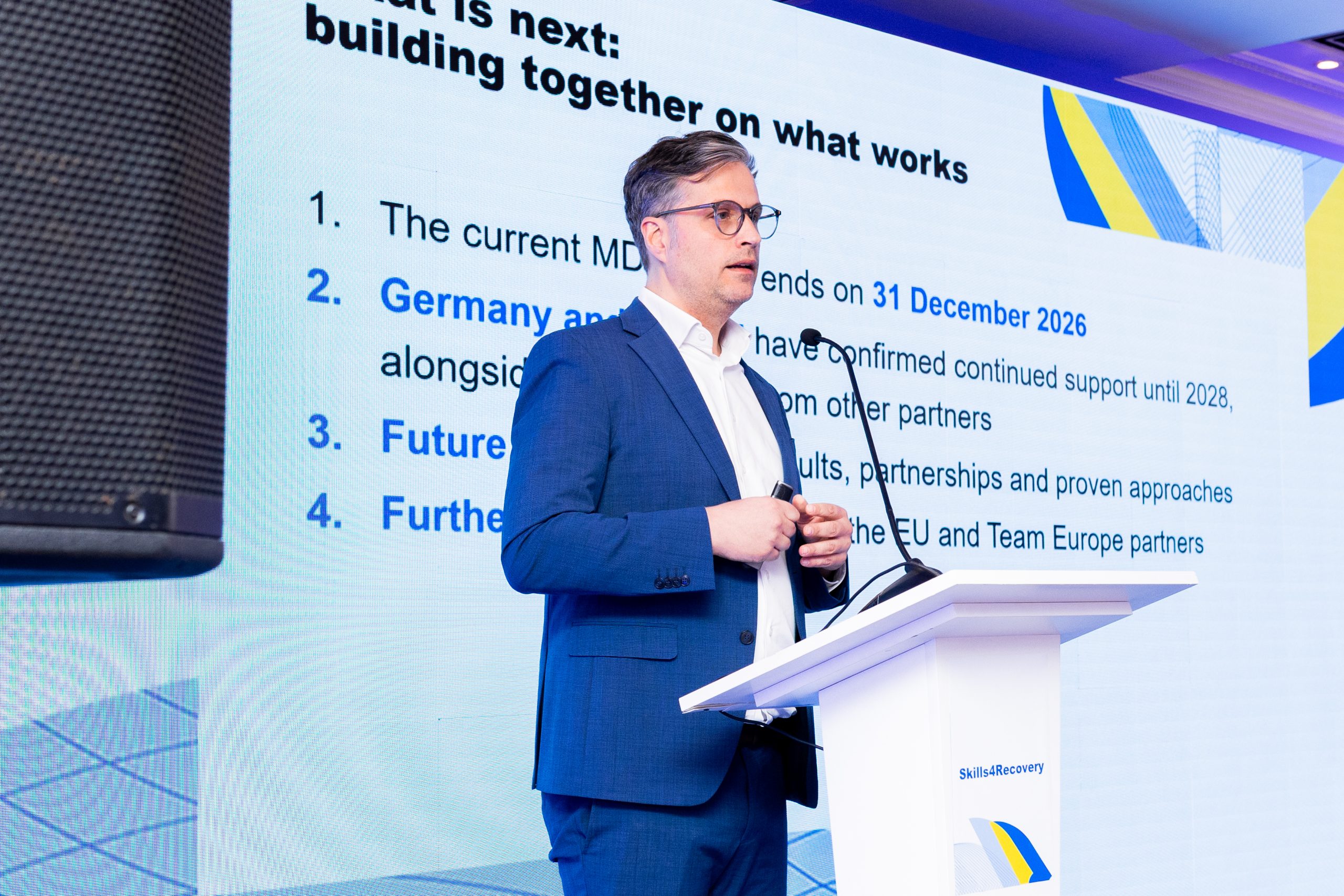
As the current phase of Skills4Recovery approaches completion on 31 December 2026, Germany and Poland have confirmed their support for continued work, building on the results and partnerships established through the initiative.
“Ukraine requires a skilled workforce to rebuild and modernise its economy. Germany remains committed to supporting Skills4Recovery, enabling vocational education and training providers to implement modern standards, adapt to rapid technological change, and prepare the people of Ukraine for the jobs of the future,” said Tony Baumann, Deputy Head of Cooperation, Embassy of Germany in Ukraine.
“Poland will continue to support vocational education and training in Ukraine, focusing on closer cooperation between VET providers and employers. We want to help more Ukrainian training providers equip students with qualifications and skills that are in demand in the labour market and needed for Ukraine’s successful development,” said Artur Grossman, Commissioner for Development Cooperation, Embassy of Poland in Ukraine.
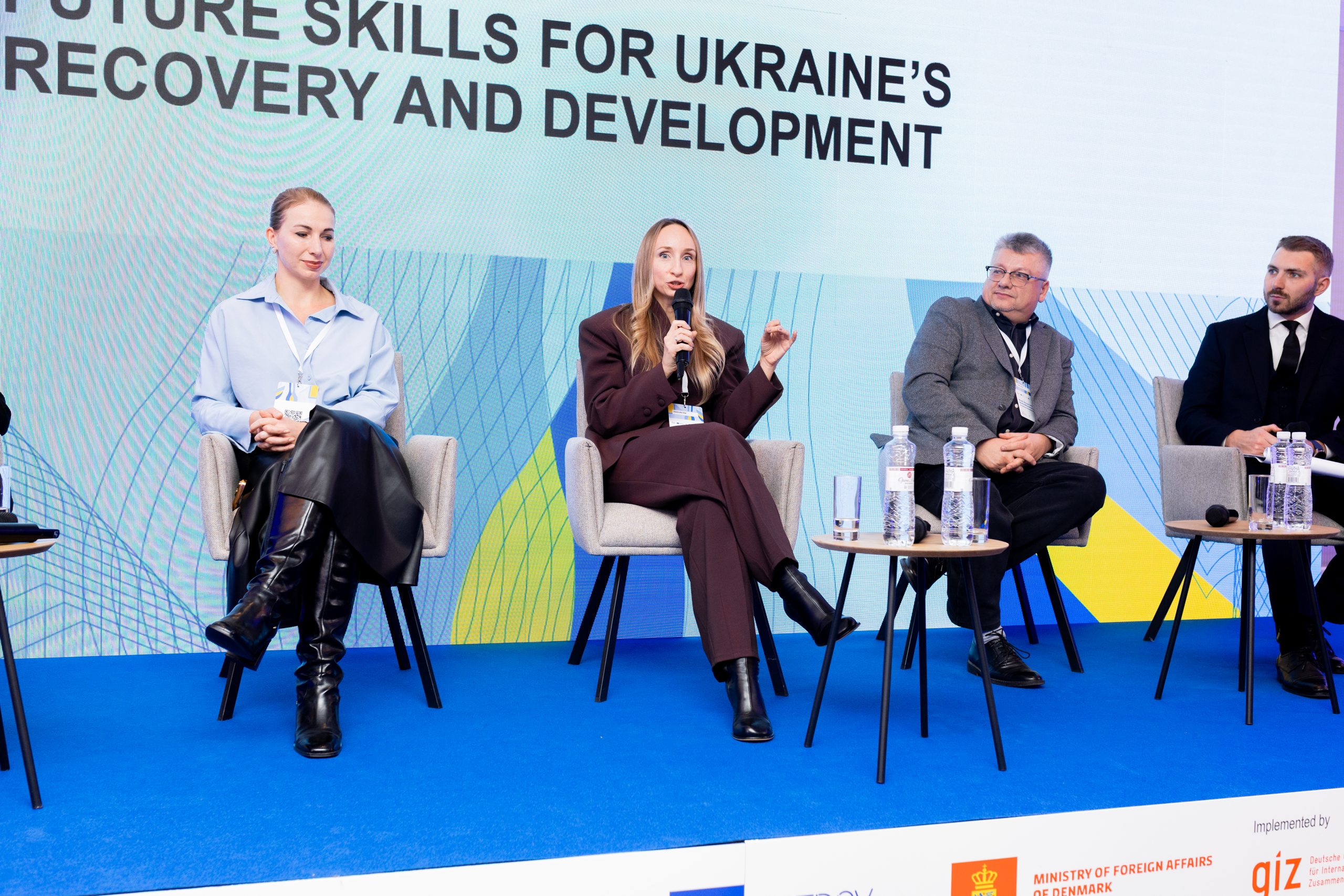
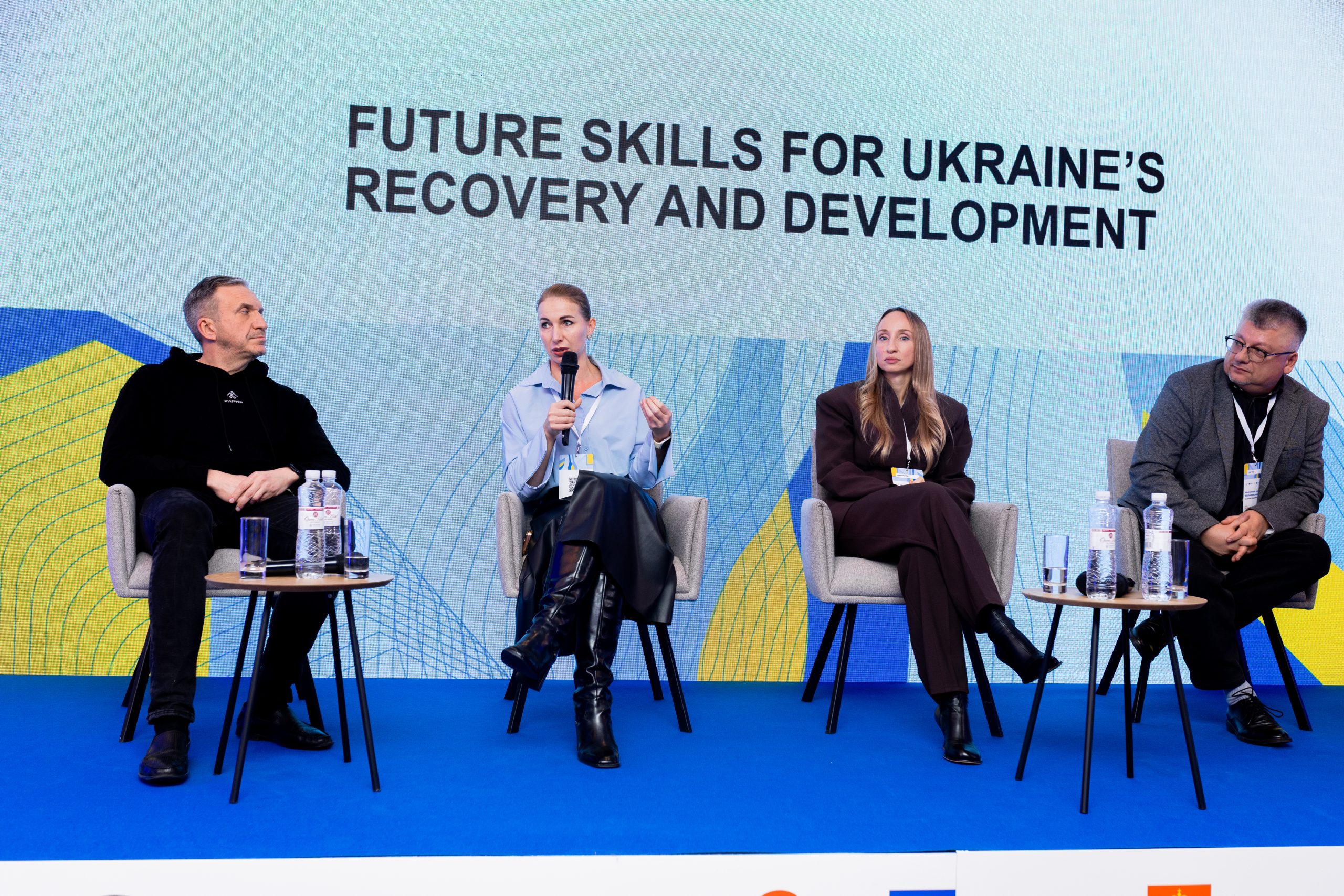
At the conference, representatives of four VET providers shared changes introduced with Skills4Recovery’s support and discussed how these approaches could be used more widely. One example was the Lviv Higher Vocational School of Computer Technologies and Construction, where an upgraded, fully accessible automotive training centre now offers modern facilities for practical learning.
“VET providers need to keep pace with changes in the economy and the skills employers require. Skills4Recovery has helped Ukrainian VET providers improve their management, introduce digital tools and modernise teaching. These changes give them greater independence in developing and improving their training programmes,” said Andrea Kivi, Chief Executive Director of ESTDEV.
To make these approaches available to other institutions, Skills4Recovery presented its Best Practices and Solutions Catalogue, bringing together practical tools and guidance for VET providers, employers, employment services and policymakers. The catalogue is available online.
Background:
The Multi Donor Initiative Skills4Recovery supports initial and further training for the workforce in five sectors important for Ukraine’s recovery: construction, transport, agriculture, services and manufacturing. It helps people gain relevant skills for employment while supporting employers in finding qualified workers.
Skills4Recovery is co-financed by the European Union, Germany, Poland, Estonia and Denmark. It is implemented by Deutsche Gesellschaft für Internationale Zusammenarbeit (GIZ) GmbH and Solidarity Fund PL (SFPL).