

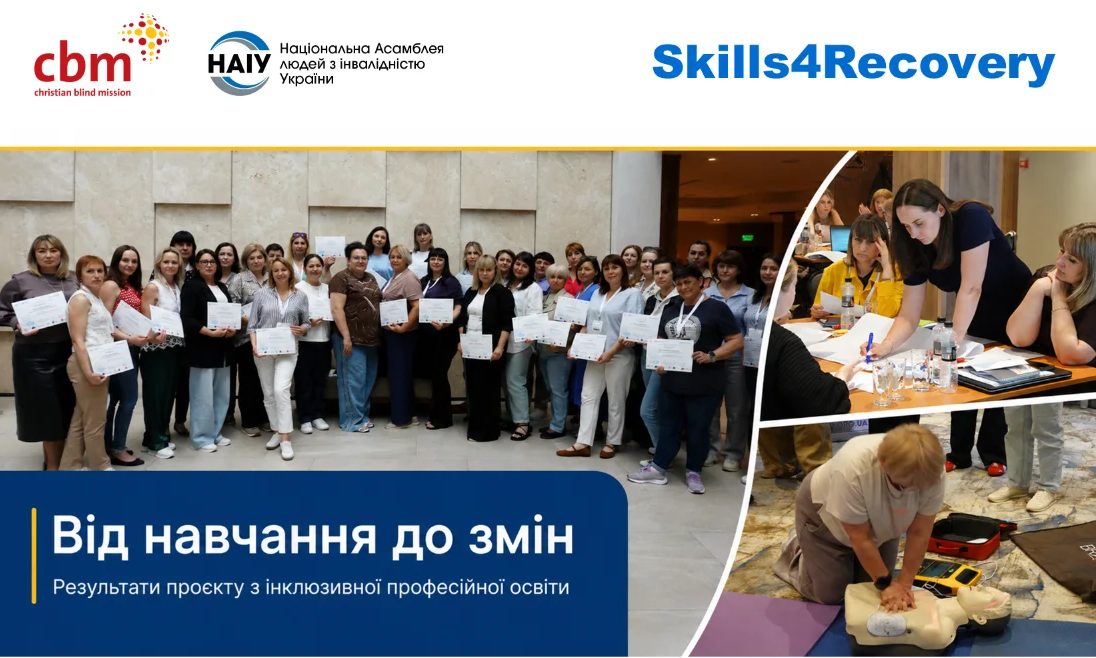
How can vocational education and training be made more accessible to veterans, people with disabilities and other learners with different needs? How can they be given the support they need throughout their journey, from admission and learning to work placements and employment?
VET providers, educators and experts worked to address these questions as part of the project Inclusive VET: Improving Training for Veterans and People with Disabilities.
The project helped VET providers create conditions that support learners throughout their journey, from admission to professional fulfilment. Teams learned to identify barriers in the learning environment, adapt learning materials and the organisation of learning without lowering vocational qualification requirements, plan the support needed and work with employers. Particular attention was paid to accessible work placements, inclusive communication and responding to crisis.
In total, 40 VET providers were involved, with 19 taking part in more in-depth work. More than 100 professionals received training, 18 VET providers received supervision support, and 31 professionals received certificates as trainers in inclusive vocational education and training. These trainers can share their knowledge with colleagues and help introduce inclusive approaches in their own providers.
The project produced a range of publications for VET provider teams, education authorities and other partners:
- Inclusive Vocational Education and Training: A Pathway from Admission to Employment: practical recommendations on accessible admissions and learning environments, planning support, adapting learning, organising work placements and working with employers.
- Methodological Recommendations "Inclusive Safety, Inclusive First Aid and Psychosocial Support in Wartime and Emergencies for Staff of VET Providers": response procedures and training scenarios to help provider staff prepare for crisis situations and agree on the steps to take.
- Communication Guide for VET Providers: advice on making communication clear, accessible and non-discriminatory for applicants, learners, employers and partners.
- Analytical Report “Training Needs Assessment for the Development of Inclusive VET”: findings from an assessment of the training needs of teaching and management teams, with recommendations for developing their practical skills.
- Trainer’s Guide “Equal Access to Vocational Education and Training: Inclusive Learning in VET Providers”: training modules, exercises and resources for workshops, in-house learning and mentoring.
- Good International Practices in Inclusive Vocational Education and Training: Lessons from Finland, Germany, the United Kingdom and Slovenia: an analysis of Ukrainian legislation and international approaches, with recommendations for developing individual support, staff training and cooperation with employers.
- The Final Report "Inclusive Vocational Education and Training: From Learning to Practical Change": the publication covers the learner’s entire educational pathway from access to information and admission to learning, practical training, and transition to employment
Learn more: From Training to Change: Results of the Inclusive Vocational Education and Training Project
Background
The project "Inclusive VET: Improving Training for Veterans and People with Disabilities" was implemented by the National Assembly of People with Disabilities of Ukraine (NAPD) in partnership with Christoffel‑Blindenmission Christian Blind Mission e.V. (CBM). The project is co‑financed by the European Union, Germany, Poland, Estonia and Denmark within the framework of the Multi Donor Initiative Skills4Recovery. Skills4Recovery is implemented by Deutsche Gesellschaft für Internationale Zusammenarbeit (GIZ) GmbH and the Solidarity Fund PL (SFPL).